How to do Keyword Research 2026: Ultimate AI Overviews
The seismic shift in search has arrived. Forget the old rules; 2026 demands a new paradigm for keyword research, one deeply intertwined with Google's AI Overviews. Are you ready to dominate the future of search?
The digital landscape is undergoing its most profound transformation in decades. As we hurtle towards 2026, the traditional pillars of SEO are being reshaped by the relentless advancement of Artificial Intelligence. At the forefront of this evolution is Google's AI Overviews—a game-changing feature that summarizes search results directly on the SERP, fundamentally altering how users interact with information and, critically, how businesses gain visibility. For any serious digital marketer or business owner, understanding how to do keyword research 2026 isn't just an advantage; it's a survival imperative.
Deploy the AbdulTSD Protocol
We don't just write about SEO & Marketing; we build the infrastructure that dominates it. Choose a unit to start.
Automate Your Growth with Industry-Standard Tools
Stop using limited trials. Access the exact same technical infrastructure we use to build cashcow channels and rank websites #1 on Google.
This isn't about minor tweaks to your existing strategy. This is about a complete overhaul, a re-evaluation of what constitutes a 'keyword' and how content truly earns its place in the coveted AI Overview snippets. The challenge is clear: how do you get your authoritative content recognized and summarized by an AI that's constantly learning, evolving, and prioritizing user intent above all else? This comprehensive guide will equip you with the insights, strategies, and tools necessary to master AI-driven keyword research and secure your place at the top of the 2026 SERP.
The AI Overviews Revolution: Why 2026 Demands a New Approach
Google's AI Overviews represent a monumental shift from the familiar "10 blue links" paradigm. Instead of presenting a list of links for users to click through, AI Overviews leverage sophisticated large language models (LLMs) to synthesize information from multiple sources and present a concise, direct answer at the very top of the search results page. This means that for many queries, the user's journey might end right there, without ever visiting a website.
This has profound implications for keyword research. If your goal has always been to rank #1 organically, your target has now moved. The new #1 is often the AI Overview itself. Your content needs to be structured and optimized not just for Google's traditional ranking algorithms, but for its AI's ability to understand, extract, and summarize your core message. The queries that trigger AI Overviews are typically informational, complex, or conversational, demanding a content strategy that prioritizes comprehensive answers and clear, entity-rich explanations.
Beyond Keywords: Understanding User Intent in the AI Era
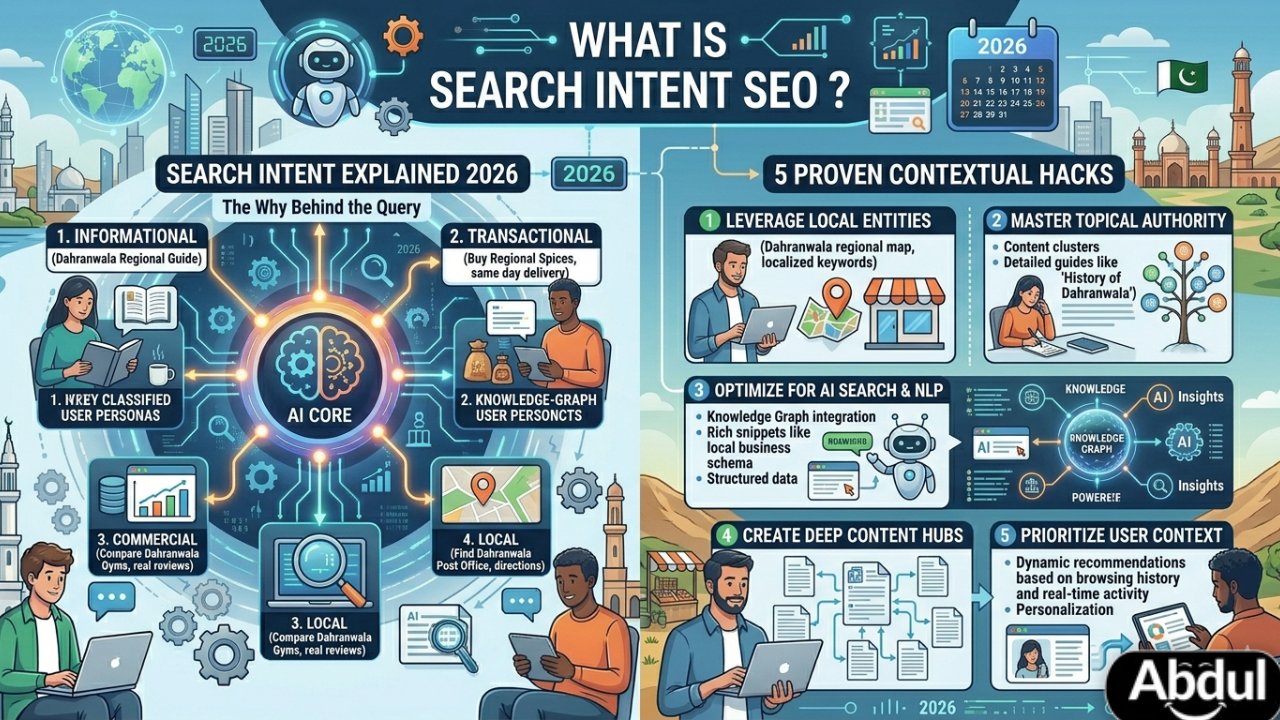
The era of simple keyword matching is firmly behind us. In 2026, keyword research is fundamentally about understanding the deep, nuanced intent behind a user's query. Google's AI doesn't just look for exact keyword matches; it interprets the semantic meaning, the context, and the implied need. This means:
- Semantic Search Dominance: AI processes queries based on their meaning, not just individual words. Your content must cover the full semantic field around a topic.
- Conversational Queries: Users are increasingly interacting with search engines as they would with a person, asking complex questions. Your keyword strategy must include long-tail, natural language queries.
- Topic Clusters are Paramount: Instead of optimizing individual pages for single keywords, you must think in terms of comprehensive topic clusters. A pillar page addresses a broad subject, while supporting cluster pages delve into specific sub-topics, all interlinked. This demonstrates holistic expertise to the AI.
To truly master how to do keyword research 2026, you need to shift your mindset from "what keywords are people searching for?" to "what problems are people trying to solve, and what information do they need to solve them completely?"
Optimizing for Google's AI Overviews: Strategies for Q1 2026 Visibility
Achieving visibility within AI Overviews by Q1 2026 requires a highly targeted and data-driven strategy. It's not enough to simply produce good content; you must produce content that is explicitly structured for AI consumption.
- Identify AI Overview Opportunities: Start by analyzing your current rankings and competitor AI Overviews. Use advanced tools (discussed below) to pinpoint queries where an AI Overview is present or highly likely. These are your battlegrounds.
- Structured Data and Schema Markup: This is non-negotiable. Implementing Schema.org markup (e.g., FAQPage, HowTo, Article, Q&A) helps Google's AI understand the specific pieces of information on your page. It's like giving the AI a roadmap to your content's key answers.
- Direct, Concise Answers: Within your content, ensure you have explicit, direct answers to common questions. Use H2/H3 tags for questions and follow immediately with a clear, concise answer in the first paragraph. This makes it easy for AI to extract.
- Comprehensive Coverage: While concise answers are crucial, the overall page must offer comprehensive coverage of the topic. AI Overviews often synthesize information from several points within a page, or even across multiple pages. Answer related questions, provide context, and explore sub-topics thoroughly.
- Internal Linking Strategy: Strengthen your topic clusters with robust internal linking. This not only aids user navigation but also helps Google's AI understand the relationships between your content pieces, reinforcing your domain authority on a subject.
"Optimizing for AI Overviews means writing for humans first, but structuring for machines to understand perfectly."
Proving E-E-A-T with Human-Centric Content in the AI Era (2026)
In a world saturated with AI-generated content, Google's emphasis on E-E-A-T (Experience, Expertise, Authoritativeness, Trustworthiness) has never been more critical. For 2026, E-E-A-T is the bedrock upon which your content's ability to be featured in AI Overviews will be built. The AI needs to trust your information implicitly, and that trust is rooted in human credentials.
- Demonstrate Real-World Experience: Share personal anecdotes, case studies, and practical examples. How have you or your team directly applied the knowledge? This adds the "Experience" dimension that AI-generated content often lacks.
- Showcase Expertise: Ensure your content is written by or heavily vetted by subject matter experts. Include detailed author bios with relevant credentials, awards, and affiliations.
- Build Authoritativeness: Cite reputable sources, link to academic papers, and reference industry leaders. Conversely, aim to be cited by others. This creates a web of authority that Google's AI can recognize.
- Foster Trustworthiness: Maintain accuracy, transparency, and provide verifiable facts. Clearly state your sources. Have a robust editorial process. Ensure your website is secure and user-friendly.
For how to do keyword research 2026 effectively, you must understand that AI Overviews are less likely to pull from anonymous, low-E-E-A-T sources. Your human-centric content, backed by demonstrable E-E-A-T, is your competitive edge against the flood of AI-generated noise.
The New Keyword Research Toolkit for 2026
While traditional keyword tools like Ahrefs, Semrush, and Moz remain foundational, their application in 2026 needs significant augmentation. The focus shifts to tools with advanced AI and NLP capabilities:
- AI-Powered Intent Analysis Tools: New platforms are emerging that use machine learning to analyze search queries not just for keywords, but for the underlying user intent (informational, navigational, transactional, commercial investigation). These tools can identify nuances that traditional metrics like search volume miss.
- Question Generation & PAA (People Also Ask) Analyzers: Tools that scrape and analyze "People Also Ask" sections, forums, and Q&A sites are crucial. These directly inform the questions your content needs to answer to satisfy AI Overviews.
- Competitor AI Overview Analysis: Dedicated features within SEO suites (or specialized tools) that show which of your competitors' content is being featured in AI Overviews, and for what queries. This provides invaluable reverse-engineering opportunities.
- Natural Language Processing (NLP) Tools: Tools that help you identify key entities, topics, and semantic relationships within your content and compare them against top-ranking pages. This ensures your content is semantically rich and comprehensive.
- Predictive Keyword Modeling: Leveraging AI to predict emerging search trends and future AI Overview opportunities before they become mainstream, allowing you to create content proactively.

When you're asking yourself how to do keyword research 2026, remember that the "toolkit" isn't just a list of software; it's a methodology that integrates human insight with advanced AI capabilities to uncover hidden opportunities.
Comparison Table: Traditional Keyword Research vs. AI-Driven Keyword Research (2026)
| Criteria | Traditional Keyword Research | AI-Driven Keyword Research (2026) |
|---|---|---|
| Primary Focus | Individual keywords, search volume, difficulty. | User intent, topic clusters, conversational queries, AI Overview potential. |
| Main Goal | Rank #1 for specific keywords (10 blue links). | Achieve AI Overview feature, provide comprehensive answers, build E-E-A-T. |
| Key Tools | Keyword Planners, basic search volume checkers, competitor ranking reports. | AI-powered intent analyzers, NLP tools, PAA scrapers, competitor AI Overview trackers, semantic analysis platforms. |
| Content Strategy | Keyword stuffing (historically), siloed pages, optimizing for exact match. | Comprehensive topic clusters, direct answer structuring, semantic relevance, E-E-A-T demonstration. |
| Success Metric | Organic keyword rankings, traffic volume. | AI Overview impressions/click-throughs, entity recognition, depth of topic coverage, brand authority. |
| Risk Factor | Missing long-tail opportunities, content decay. | Misinterpreting AI signals, over-reliance on AI content generation, neglecting human editorial. |
Advanced Video SEO: Dominating YouTube Shorts & TikTok Search in 2026
As AI Overviews continue to evolve, it's crucial to acknowledge that search isn't confined to Google's main SERP. Video platforms, especially YouTube Shorts and TikTok, are increasingly functioning as search engines, particularly for younger demographics. For 2026, a holistic keyword research strategy must extend into these visual domains.

- Video as a Primary Answer Medium: AI Overviews can and will integrate video content. Short-form videos (like YouTube Shorts and TikToks) are perfectly suited for answering quick, direct questions that an AI Overview might present.
- Transcriptions and Closed Captions: Crucial for AI understanding. Ensure all your video content has accurate transcriptions and closed captions. This allows Google's AI to 'read' and understand the content of your video, making it eligible for AI Overviews or video carousels.
- Optimizing Video Titles and Descriptions: Go beyond catchy phrases. Use your target keywords (including long-tail and conversational queries related to how to do keyword research 2026) in titles, descriptions, and video tags. Think of your description as a mini-blog post, providing context and keywords for the AI.
- Hashtag Strategy: On platforms like TikTok, hashtags function as keywords. Research trending and relevant hashtags extensively to maximize discoverability.
- Engagement Signals: Likes, comments, shares, and watch time are vital signals for video platforms' algorithms and, by extension, for AI's perception of content quality and relevance.
Integrating video content into your keyword strategy means considering how a visual medium can best answer a user's query, and then optimizing that video for both human viewers and AI comprehension.
Practical Steps to Implement AI-Driven Keyword Research
Now that we've covered the theoretical shifts, let's outline actionable steps to help you master how to do keyword research 2026:
- Begin with Broad Topics, Not Just Keywords: Start by identifying the core problems or interests of your target audience. Use tools to analyze broad topics rather than getting fixated on individual keywords initially.
- Deep Dive into User Intent: For each topic, use AI-powered tools to uncover the full spectrum of user intent. What questions are they asking? What solutions are they seeking? Look at PAA, 'Related Searches,' and forum discussions.
- Analyze Existing AI Overviews: For your identified topics, search Google. If an AI Overview exists, dissect it. What sources did it use? How is the information structured? What questions does it answer directly?
- Map Intent to Content Formats: Determine the best content format for each intent. A quick question might need a blog post with a direct answer in the first paragraph, while a complex "how-to" might require a detailed guide with video embeds and structured data.
- Structure Content for AI Extraction:
- Use clear, hierarchical headings (H1, H2, H3).
- Employ bullet points, numbered lists, and tables to break down complex information.
- Provide concise, definitive answers to questions immediately after the question is posed.
- Implement relevant Schema markup.
- Prioritize E-E-A-T Signals: Ensure every piece of content clearly showcases the expertise and authority of its author(s). Include author bios, citations, and unique data where possible.
- Create Comprehensive Topic Clusters: Develop a network of interlinked content around your pillar topics. This demonstrates depth of knowledge to both users and AI.
- Integrate Video SEO: For queries where visual answers are beneficial, create and optimize short-form video content for platforms like YouTube Shorts and TikTok, ensuring thorough transcriptions.
- Monitor and Adapt Relentlessly: AI Overviews are dynamic. Regularly track your content's performance in AI Overviews, observe changes in search intent, and adapt your keyword and content strategies accordingly.
Pros and Cons of AI-Driven Keyword Research
Embracing the AI-driven approach to keyword research comes with significant advantages, but also new challenges.
Pros:
- Enhanced Visibility: Significantly increases your chances of appearing in the highly coveted AI Overview snippets, driving targeted traffic and brand exposure.
- Deeper User Understanding: Forces a focus on true user intent, leading to content that genuinely solves problems and resonates with the audience.
- Future-Proof Content Strategy: Aligns your SEO efforts with the ongoing evolution of search, making your content more resilient to future algorithm updates.
- Increased E-E-A-T: Encourages the creation of high-quality, authoritative content, which builds trust and domain authority.
- Competitive Edge: Early adopters of this advanced methodology will gain a significant advantage over competitors still clinging to outdated practices.
- Improved Content Quality: The need for comprehensive, well-structured, and semantically rich content naturally leads to higher quality outputs.
Cons:
- Requires New Skillsets: Demands a deeper understanding of AI, NLP, and semantic SEO, which may require training or new hires.
- Increased Complexity: The process is more intricate and time-consuming than traditional keyword research, requiring advanced tools and analytical capabilities.
- Tool Investment: Accessing cutting-edge AI-powered keyword research tools can be a significant financial investment.
- Dynamic Landscape: AI Overviews are constantly evolving, requiring continuous monitoring and adaptation, which can be resource-intensive.
- Risk of Misinterpretation: Misunderstanding AI signals or over-optimizing can lead to penalties or reduced visibility if not handled carefully.
The benefits of mastering how to do keyword research 2026 for AI Overviews far outweigh the challenges for any forward-thinking business.
Ready to revolutionize your SEO strategy and dominate the AI-powered search landscape? Get a Free SEO Audit Tool to see where your current efforts stand against the demands of 2026. Discover opportunities to optimize for AI Overviews and build unparalleled domain authority.
Want to see how we've helped others navigate this complex shift? Explore our successful Case Studies to learn more about our data-driven approach and the results we deliver.
Unlock Your Digital Potential
Complimentary tools designed to accelerate your growth.