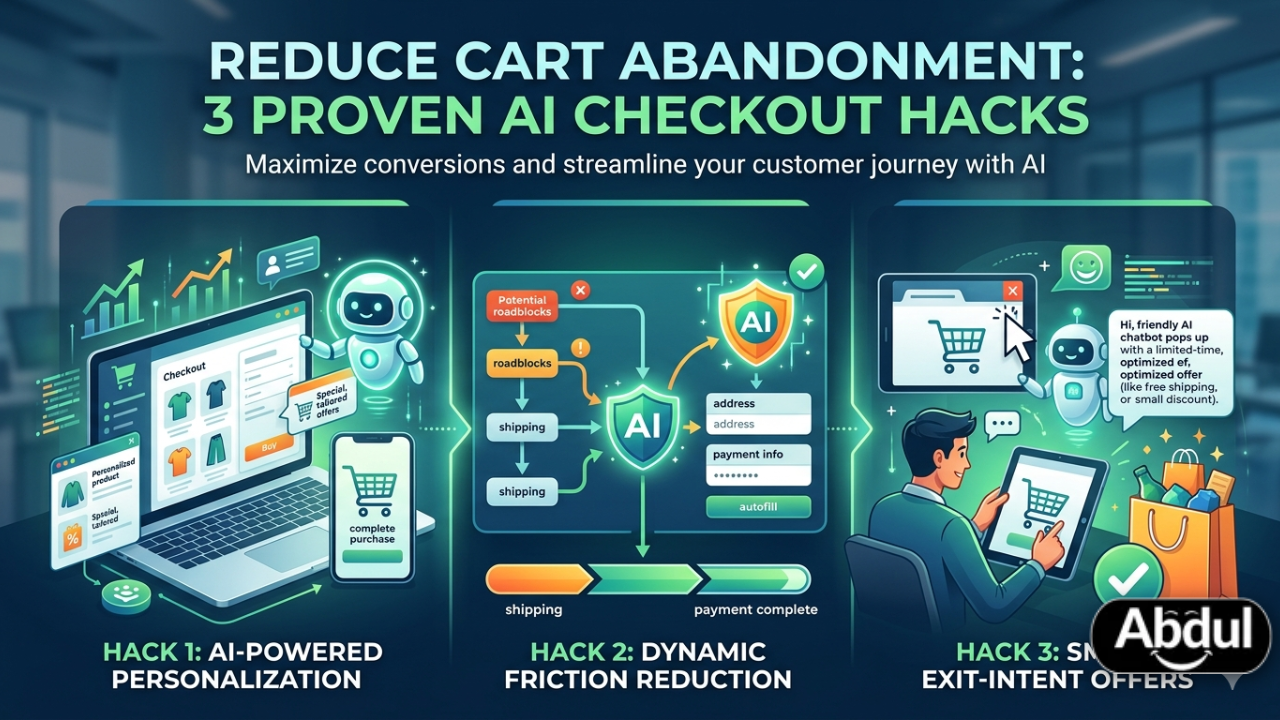
Why Do Customers Abandon Shopping Carts? 3 Proven AI Checkout Hacks
Every e-commerce manager knows the gut punch. You’ve spent a fortune on traffic, perfected your product pages, and then, at the finish line, customers vanish. This isn't just a minor annoyance; it's a gaping wound in your revenue stream, often accounting for 70-80% of potential sales lost. The question of "why do customers abandon shopping carts" isn't new, but in March 2026, the answers—and the solutions—are radically different. We're past the era of simple A/B tests on button colors. Today, High-Intent Checkout Design, powered by AI, is the only way to truly reduce cart abandonment and salvage those lost sales. Ignoring this shift is akin to leaving cash on the pavement for your competitors to scoop up. The cold, hard truth is that most online stores bleed money at checkout. They focus on getting users *to* the cart, then leave them to wrestle with clunky forms, unexpected fees, and a general sense of unease. This isn't just about losing a single sale; it erodes customer trust and damages your brand's reputation, making future conversions even harder. If you’re not actively deploying advanced AI to smooth out every micro-interaction in your checkout flow, you’re leaving millions on the table. It’s time to stop guessing and start converting with intelligent, data-driven solutions that put the customer experience first.What is Cart Abandonment, Really? It's a Failure of Trust.
When we ask "why do customers abandon shopping carts," we're not just talking about someone adding an item and then closing the tab. That’s a symptom, not the disease. True cart abandonment, especially in the high-intent context, happens when a customer *wants* to buy, has made a conscious decision, and then encounters a barrier so significant it overrides their desire. This isn't indecision; it's friction. This friction often manifests as unexpected shipping costs, forced account creation, overly complex forms, or a perceived lack of security. Each of these elements chips away at the customer's trust and commitment. Consider a user on their iPhone, late at night, finally deciding to pull the trigger on that new pair of limited-edition sneakers. They’ve navigated product pages, read reviews, and clicked "Add to Cart." They are ready. But then, the checkout demands they create an account, fill out 15 fields, and re-enter their shipping address for the third time. Or worse, a progress bar shows "Step 1 of 5" for a single item purchase. That’s where the trust breaks. That’s where the sale dies, often within seconds of hitting the checkout page. The mental burden becomes too high, and the perceived reward diminishes significantly. The core problem of "why do customers abandon shopping carts" boils down to a lack of frictionless UI. Customers expect Amazon-level ease, even from a niche boutique. They want to buy, not fill out a census. This is precisely where AI-driven solutions shine, starting with the basics: one-click checkout options and optimized guest checkout. If you force an account creation, you’re actively pushing away a significant segment of your potential buyers—especially first-time customers who aren't ready for a long-term commitment to your brand. Just stop it. Prioritize the sale, then nurture the relationship. Person looking frustrated at phone
💡 Pro Tip: Implement a prominent "Continue as Guest" option. Then, use AI to suggest account creation *after* the purchase is complete, leveraging the positive post-purchase experience and providing incentives like loyalty points or exclusive discounts for signing up. This flips the script from an obstacle to an opportunity.
How AI Transforms the Checkout Flow: Predictive Personalization
Understanding "how does why do customers abandon shopping carts work" means understanding the psychological journey of a buyer. They want speed, security, and simplicity. AI doesn't just address these; it anticipates them, turning potential hurdles into seamless interactions. This isn't some futuristic concept; it's live on leading e-commerce platforms right now, setting new benchmarks for conversion rates. One of the most powerful AI hacks is **predictive pre-fills for expedited checkout forms**. Imagine a returning customer, maybe on a site like Sephora. As they type the first few letters of their name, AI instantly suggests their full name, address, and even payment method based on past purchases and browser data. For new customers, AI can leverage IP location to suggest country and state, or use common address patterns to auto-complete street names after just a few characters. This isn't magic; it's machine learning analyzing patterns and user behavior, significantly reducing typing effort and potential errors. It shaves seconds off the process, but those seconds feel like minutes to an impatient buyer, drastically improving completion rates. Then there's **biometric authentication and passkey integration**. Forget remembering complex passwords. With a quick Face ID scan, a fingerprint, or a device passkey, a purchase is complete, often with a single tap. This isn't just convenient; it's incredibly secure, leveraging the advanced encryption and authentication methods native to modern devices. Platforms like Shopify Plus and many payment gateways are already integrating these features, allowing users to leverage their device's native security for lightning-fast, one-click purchases. This eliminates password fatigue, a major contributor to "why do customers abandon shopping carts," and instills a higher level of trust in the security of the transaction. Finally, **dynamic checkout optimization with real-time A/B testing and machine learning** is non-negotiable. Your checkout isn't static. AI constantly monitors user behavior—from mouse movements and scroll depth to field-by-field completion rates—identifying bottlenecks and automatically adjusting elements like form field order, payment gateway prominence, micro-copy, or even the layout of shipping options. If a specific demographic consistently drops off at the shipping calculation stage, the AI can dynamically offer a flat rate or free shipping incentive for that segment, in real-time. It can also identify if a particular payment method is underperforming and subtly reorder options. This level of adaptive UI and continuous optimization is impossible with manual testing alone, providing a personalized and maximally efficient path to purchase for every single user.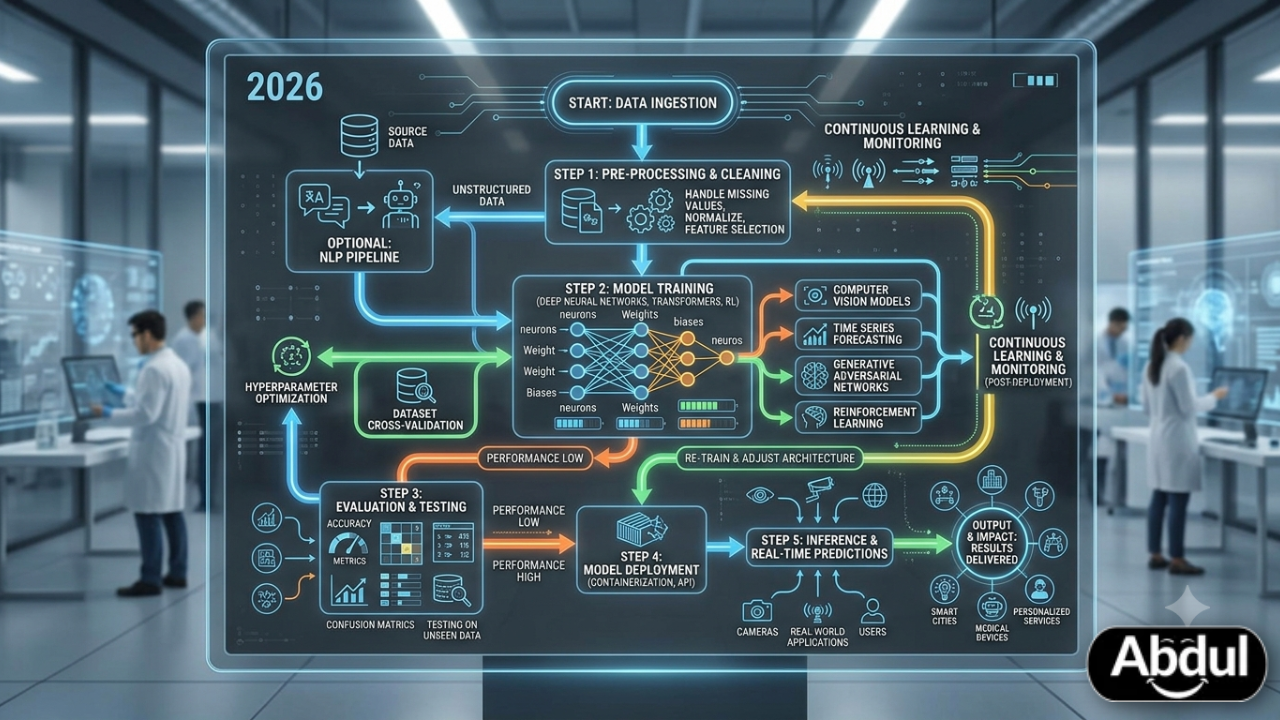 AI algorithm flow chart
📊 Data Point: Research on 'why do customers abandon shopping carts' shows growing importance in the High-Intent Checkout Design: Reducing Cart Abandonment with Frictionless UI space. This isn't a trend; it's the new baseline for competitive e-commerce. Businesses that fail to adapt risk falling significantly behind in market share and customer loyalty.
The Unignorable Importance of Frictionless UI for Revenue
"Why is why do customers abandon shopping carts important?" The answer is simple: it directly impacts your bottom line, your customer lifetime value, and your market share. Every abandoned cart is a direct hit to your revenue, but it's also a missed opportunity to build a loyal customer, acquire valuable data, and enhance brand perception. The cumulative effect of high abandonment rates can cripple even the most well-funded e-commerce operations. Consider a B2B SaaS company selling a complex subscription service. Their checkout might involve multiple tiers, add-ons, user licenses, and integration choices. Without **dynamic, schema-backed product validation at checkout**, errors are rampant. A user selects a feature incompatible with their chosen plan, or inputs a quantity that breaks the pricing logic. Traditional forms would throw a generic error message, forcing the user to backtrack and guess. A smart AI-driven checkout, however, validates in real-time. It highlights the exact field with a clear, user-friendly message, suggests corrections, or even dynamically adjusts the options available based on previous selections to prevent incompatible configurations. This proactive error prevention not only saves the sale but also reduces customer support inquiries and improves user satisfaction. Micro-interactions and progress indicators also play a massive role in reducing user anxiety and maintaining momentum. A simple "Step 1 of 3" bar, or a subtle animation confirming a field input, reassures the user they're making progress. Visual feedback like green checkmarks for valid fields, or immediate highlighting of errors, provides clarity. It sounds trivial, but these small cues build confidence, manage expectations, and prevent the feeling of being stuck in an endless form. When a customer feels lost or confused, or perceives the process as too long, they leave. It's that simple, and AI can optimize the placement and timing of these cues for maximum effect. If your checkout process feels like a bureaucratic nightmare, customers will simply go to a competitor who offers a smoother experience. This isn't about being lazy; it's about respecting their time and attention in a hyper-competitive digital landscape. In a world where every click counts, a clunky checkout is a death sentence for sales and a direct invitation for customers to take their business elsewhere. The marginal gains from a truly frictionless UI translate into significant revenue increases and a stronger brand reputation over time.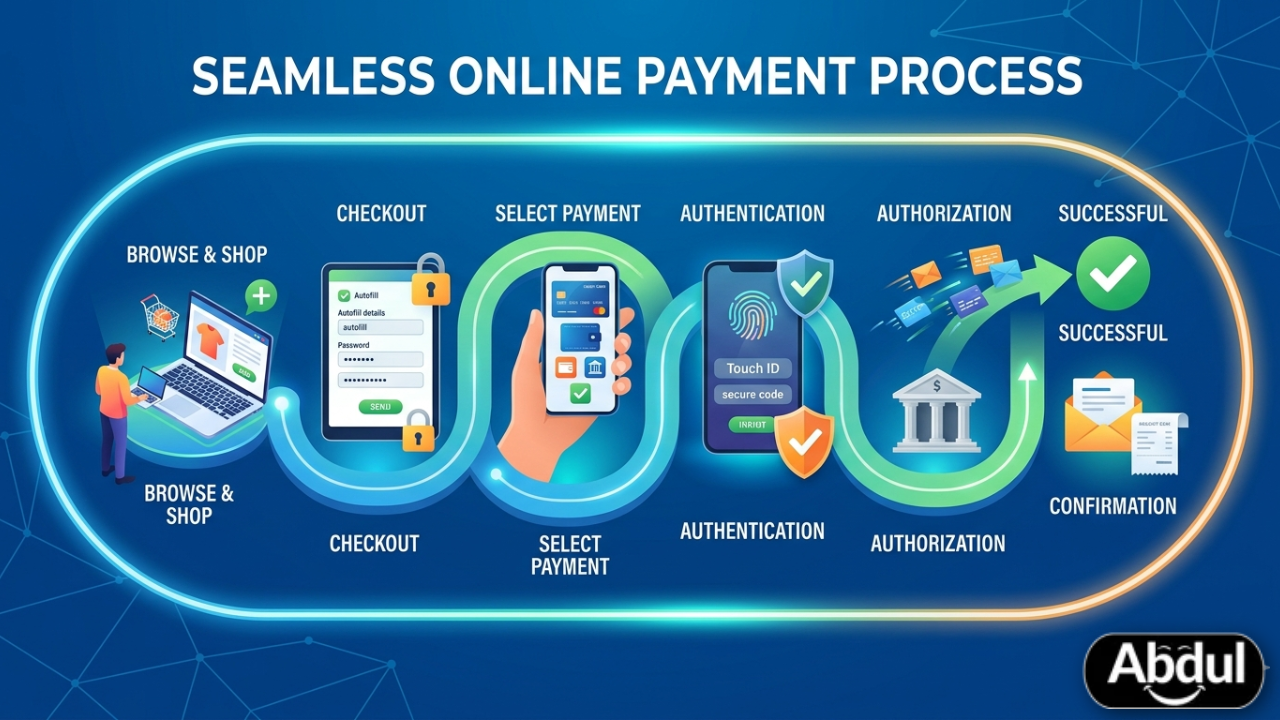 Seamless online payment process
The Hard Truth About Your Checkout: Stop Blaming Your Customers
Most teams fail at reducing cart abandonment because they overcomplicate the basics or, worse, they blame the customer. "Oh, they were just browsing," or "They probably found it cheaper elsewhere." That’s a cop-out. The real reason "why do customers abandon shopping carts" is often because your checkout experience is fundamentally broken, riddled with unnecessary friction points that are entirely within your control. Stop doing X. It kills budgets. You're spending thousands on marketing to drive traffic, only to have a leaky bucket at the most critical stage. Specifically, stop forcing account creation, stop introducing unexpected shipping costs or taxes late in the process, stop using slow or unreliable third-party payment gateways, and stop neglecting mobile optimization for your checkout flow. Many e-commerce brands, even those on robust platforms like Shopify, rely on default checkout templates or poorly integrated third-party apps that introduce more problems than they solve. They don't invest in the custom development or AI integration needed to truly optimize the final steps, seeing it as an expense rather than a critical revenue driver.⚠️ Common Mistake: Relying solely on basic analytics to identify checkout drop-offs. You need heatmaps, session recordings, and AI-driven behavioral analysis to understand *why* users are hesitating or abandoning specific fields. Google Analytics won't tell you that a specific payment gateway button isn't rendering correctly on older Android devices, or that users are repeatedly trying to click a non-functional element, indicating a design flaw. These granular insights are essential for truly pinpointing and fixing friction.
Consider the limitations of a standard WordPress WooCommerce setup without significant customization. While flexible, its default checkout is often bloated, lacks modern predictive features, and can be a nightmare for mobile users due to slow loading times and unresponsive design. Magento, while powerful, demands expert configuration and significant development resources to unlock its full potential for frictionless UI and AI integration. If you're not actively leveraging AI to streamline these platforms, or considering headless commerce architectures for greater flexibility, you're operating with one hand tied behind your back, providing a subpar experience compared to AI-enabled competitors.
The truth is, your customers aren't abandoning *your products*; they're abandoning *your process*. They want to buy. You're making it too hard with outdated practices and a lack of investment in modern, intelligent solutions. It’s time for a paradigm shift in how e-commerce businesses view their checkout experience.
Your Next Move to Salvage Sales
The era of passive checkout optimization is over. If you're serious about revenue growth in 2026, you need to move beyond basic A/B testing and embrace AI-driven solutions for your high-intent checkout design. Start by auditing your current checkout flow with a critical eye, identifying every single point of friction using advanced behavioral analytics tools. Then, look to implement AI-powered predictive pre-fills, biometric authentication, and dynamic optimization that adapts to each user in real-time. Don't let another sale slip through your fingers. It's time to overhaul your online store’s user experience for maximum sales, transforming your checkout from a conversion killer into a conversion champion. The investment in AI-driven checkout optimization pays for itself rapidly through recovered revenue and improved customer loyalty. Check out our case studies to see how we’ve helped businesses like yours convert more. Or, if you're ready to get serious, contact us for a Free SEO Audit Tool to identify your biggest conversion blockers and chart a path to a truly frictionless, AI-powered checkout experience. 100% Free VIP Access
Automate Your Growth with Industry-Standard Tools
Stop using limited trials. Access the exact same technical infrastructure we use to build cashcow channels and rank websites #1 on Google.
Technical SEO Audit
AI CV Architect
Cashcow Automation
AI Brand Suite
E-commerce
How a project runs
We don't just write about E-commerce; we build the work it describes. Choose a service to start.
Topics:
cart abandonment
AI checkout hacks
reduce lost sales
e-commerce optimization
why customers abandon shopping carts
AI solutions
checkout conversion
revenue recovery
Unlock Your Digital Potential
Complimentary tools designed to accelerate your growth.