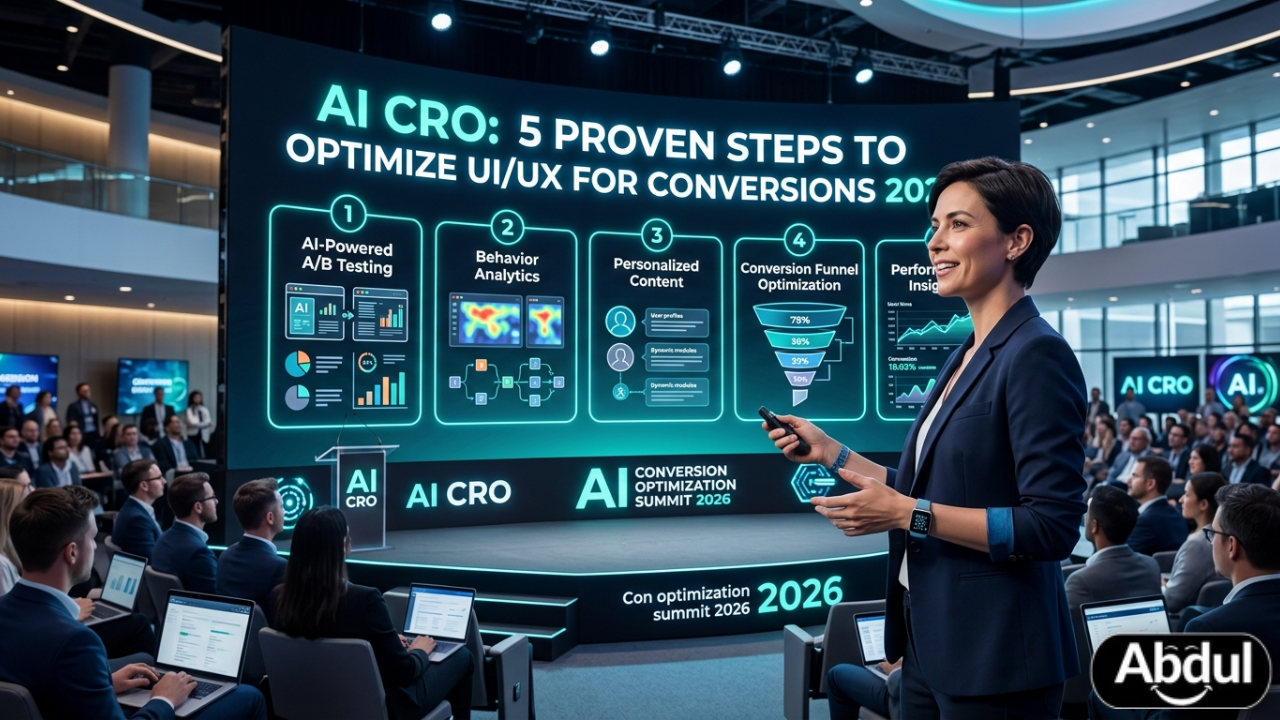
Optimize UI/UX for Conversions: 5 Proven 2026 AI CRO Steps
Traffic? A total myth. Seriously, stop believing it. You can pump millions into SEO, those pricey paid ads, and endless content marketing, but what if your site just... doesn'
The game has changed. Chasing rankings is pointless if your user experience is a digital graveyard. This isn't about pretty pixels anymore; it's about engineering every touchpoint to drive action. We're talking about a seismic shift where Conversion Rate Optimization (CRO) isn't just a tactic; it's the new SEO. And AI? It's not just assisting; it's fundamentally reshaping how we optimize UI/UX for conversions.
Deploy the AbdulTSD Protocol
We don't just write about Technology; we build the infrastructure that dominates it. Choose a unit to start.
Forget the old playbook. This is your practical guide, packed with expert tips and common mistakes to avoid, showing you exactly how to leverage AI and deep UI/UX engineering to turn visitors into customers. We'll give you the checklist to audit your own site's "stickiness" and mobile performance, because frankly, your bottom line depends on it.
Automate Your Growth with Industry-Standard Tools
Stop using limited trials. Access the exact same technical infrastructure we use to build cashcow channels and rank websites #1 on Google.
What Does "Optimize UI/UX for Conversions" Even Mean in 2026?
In simple terms, to optimize UI/UX for conversions means meticulously crafting every element of your digital interface to guide users toward a specific, desired action. It's not about making things look good; it's about making them perform. This isn't a design sprint; it's an ongoing engineering discipline focused on user psychology and measurable outcomes.
Think beyond button colors. We're talking about the deep mechanics of user interaction. Core Web Vitals, for instance, aren't just technical metrics; they're direct indicators of user frustration. A slow Largest Contentful Paint (LCP) or a jarring Cumulative Layout Shift (CLS) doesn't just hurt your Google ranking; it makes users bounce before they even see your value proposition. And Interaction to Next Paint (INP)? That's the real-time responsiveness users demand. If your site feels sluggish, they're gone. Period.
The psychology of "Smooth Design" plays a massive role here. It’s about more than aesthetics. How lighting, texture, and spacing impact user trust is profound. A cluttered interface with harsh contrasts feels cheap, untrustworthy. But a clean, well-spaced layout with soft, professional lighting—even if it's just implied through color and shadow—builds immediate credibility. It’s subconscious, but it dictates whether a user feels safe enough to give you their email, or worse, their credit card details.
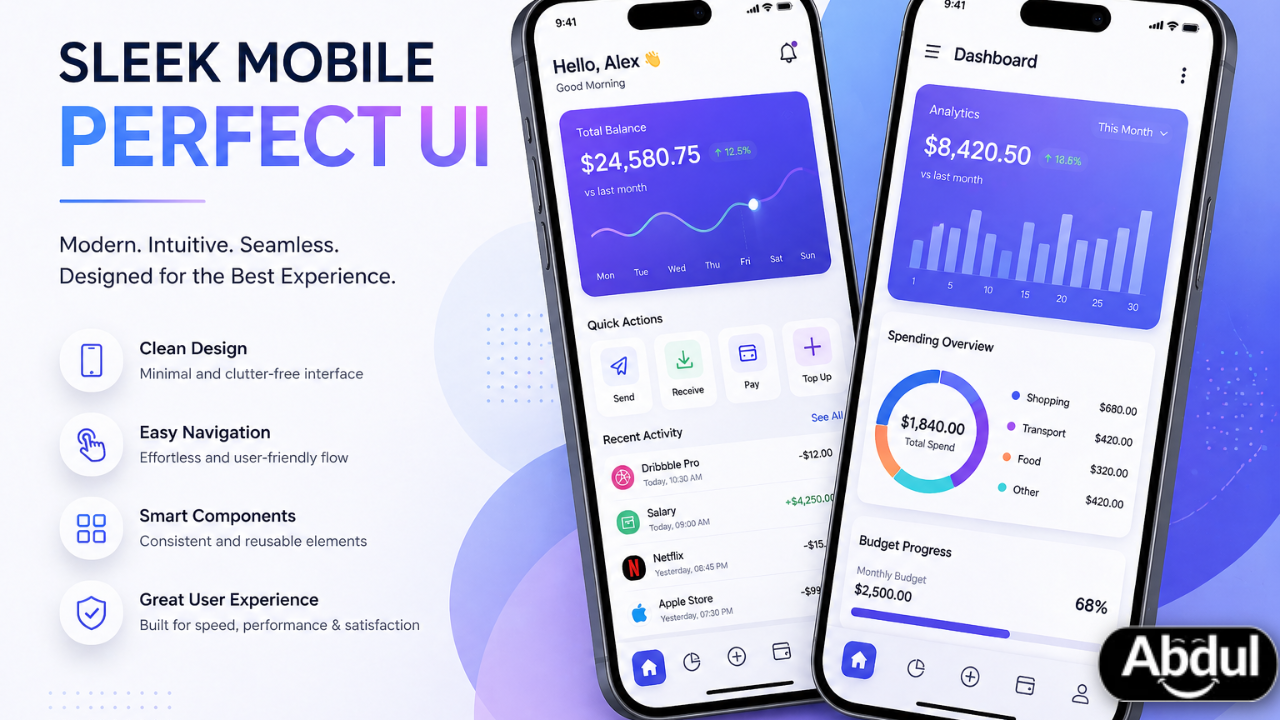 Sleek mobile perfect UI
The AI-Powered Mechanics: How to Actually Optimize UI/UX for Conversions
This isn't theory. These are the five concrete steps you need to implement right now to truly optimize UI/UX for conversions in an AI-driven 2026 landscape.
1. AI-Driven Hyper-Personalization with First-Party Data
The post-cookie world isn't a threat; it's an opportunity for those who master first-party data. AI platforms like Dynamic Yield or Optimizely aren't just segmenting users; they're creating hyper-personalized journeys in real-time. Imagine a mid-sized SaaS company selling project management software. Instead of a generic homepage, AI analyzes a returning visitor's past interactions—what features they clicked, which case studies they viewed, even their company size from a CRM integration. Then, it dynamically serves up a hero section highlighting features relevant to their specific industry, or a testimonial from a similar-sized business. This isn't just A/B testing; it's A/Z testing across millions of permutations.
2. Core Web Vitals and INP as Conversion Metrics
Stop treating Core Web Vitals as just an SEO checkbox. They are conversion metrics. When an e-commerce brand moves a 50k SKU catalog from Shopify to Magento, the performance hit can be catastrophic. If your Largest Contentful Paint (LCP) is 4 seconds on mobile, users aren't waiting. They're gone. And Interaction to Next Paint (INP)? That's the responsiveness of your checkout button, the speed of your filter application. A high INP means a frustrating, slow experience. AI tools like Lighthouse CI or Datadog RUM (Real User Monitoring) can now pinpoint exactly where these performance bottlenecks are occurring in the user journey, allowing for surgical optimization that directly impacts conversion rates.
3. "Smooth Design" Psychology & Trust Signals
The subtle art of "Smooth Design" is no longer optional. It's a conversion imperative. Consider a financial services website. The lighting (color palette, contrast), texture (subtle gradients, crisp lines), and spacing (generous whitespace, clear hierarchy) of their UI directly influence perceived trustworthiness. A site that feels chaotic or cheap immediately erodes confidence. AI-powered design tools are emerging that can analyze user eye-tracking and click-maps to suggest optimal layouts, font pairings, and color schemes that subconsciously build trust and reduce cognitive load. This isn't just about aesthetics; it's about engineering emotional responses that lead to conversion. A well-designed call-to-action, framed by ample whitespace and a calming color, performs dramatically better than one crammed into a busy footer.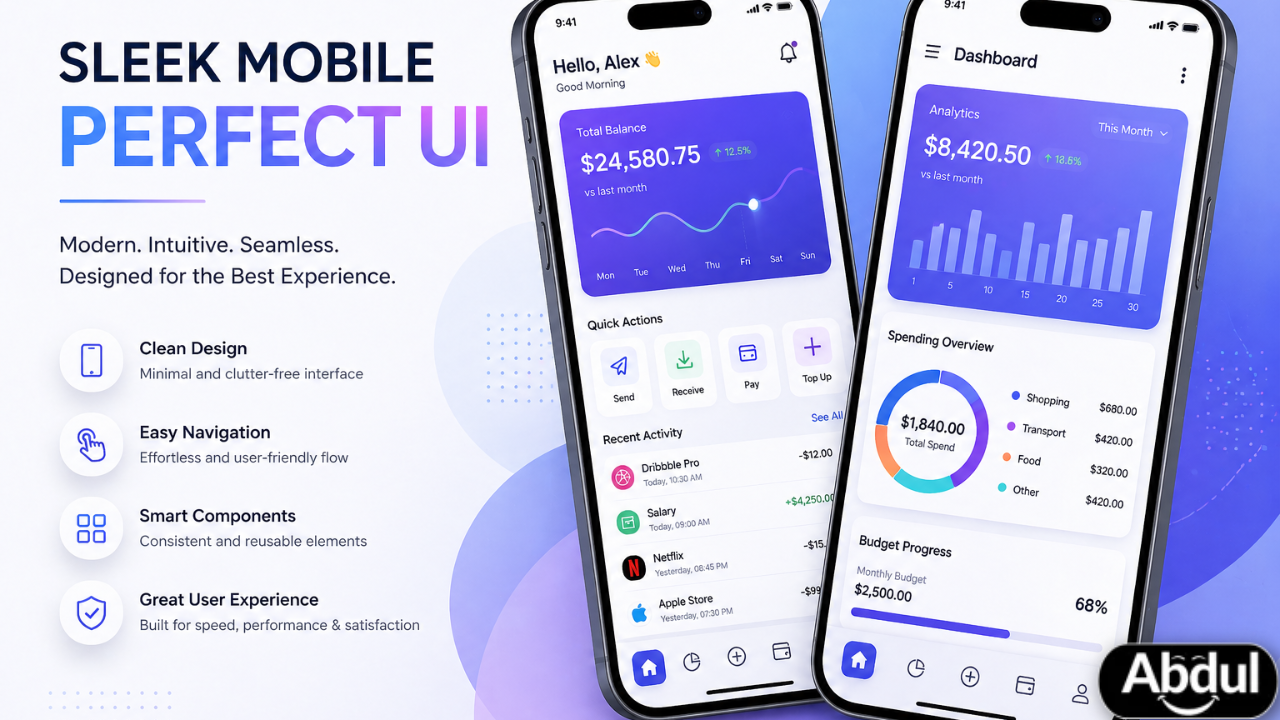 User interacting with sleek mobile app
4. Accessibility as a Strategic CRO Lever
Ignoring accessibility is not just unethical; it's a massive conversion blocker. Accessibility isn't a compliance burden; it's a strategic lever to optimize UI/UX for conversions. By designing for WCAG 2.2 standards, you're not just helping users with disabilities; you're improving the experience for everyone. Clear focus states, proper alt-text, keyboard navigation, and robust semantic HTML benefit mobile users, users in low-bandwidth areas, and even search engine crawlers. AI-powered accessibility auditing tools can now scan your entire site, identifying violations and suggesting code-level fixes, turning what was once a manual, painstaking process into an automated, continuous improvement cycle. This opens up your market to millions of potential customers you were previously excluding.
5. Automated Technical QA & A/B Testing
Manual QA is dead for CRO. AI-driven testing platforms are automating the identification of UI/UX friction points, from broken forms to unresponsive elements across thousands of device and browser combinations. And for A/B testing? AI isn't just telling you which variant won; it's generating new, optimized variations based on user behavior patterns. Imagine an AI analyzing heatmaps and session recordings on a product page, then automatically generating five new layouts, testing them, and deploying the winner without human intervention. This accelerates your CRO cycles from weeks to days, allowing you to continuously optimize UI/UX for conversions at a pace human teams simply can't match.
The Hard Truth: Why Most Teams Fail to Optimize UI/UX for Conversions
Most teams fail at this because they overcomplicate the basics, or worse, they ignore them entirely. They treat UI/UX as a "design phase" that ends when the site launches, rather than an ongoing engineering process. This is a fatal flaw. You can't just build it and forget it. The internet is dynamic, user expectations evolve, and your competitors are always iterating.
"The biggest mistake I see is treating CRO as a one-off project. It's a continuous feedback loop. If you're not constantly testing, learning, and adapting your UI/UX, you're effectively falling behind."
Many organizations are still stuck in a traffic-first mindset. They believe if they just get more eyeballs, conversions will follow. Big mistake. It bleeds budgets dry. When you actually map out the implementation timeline over six months, focusing on traffic without addressing conversion blockers is like pouring water into a sieve. The problem isn't getting people to your site; it's keeping them there and guiding them to action. And remember that 50% user loss due to poor mobile responsiveness? That's not a suggestion; it's a crisis for most businesses. Ignoring it is professional negligence.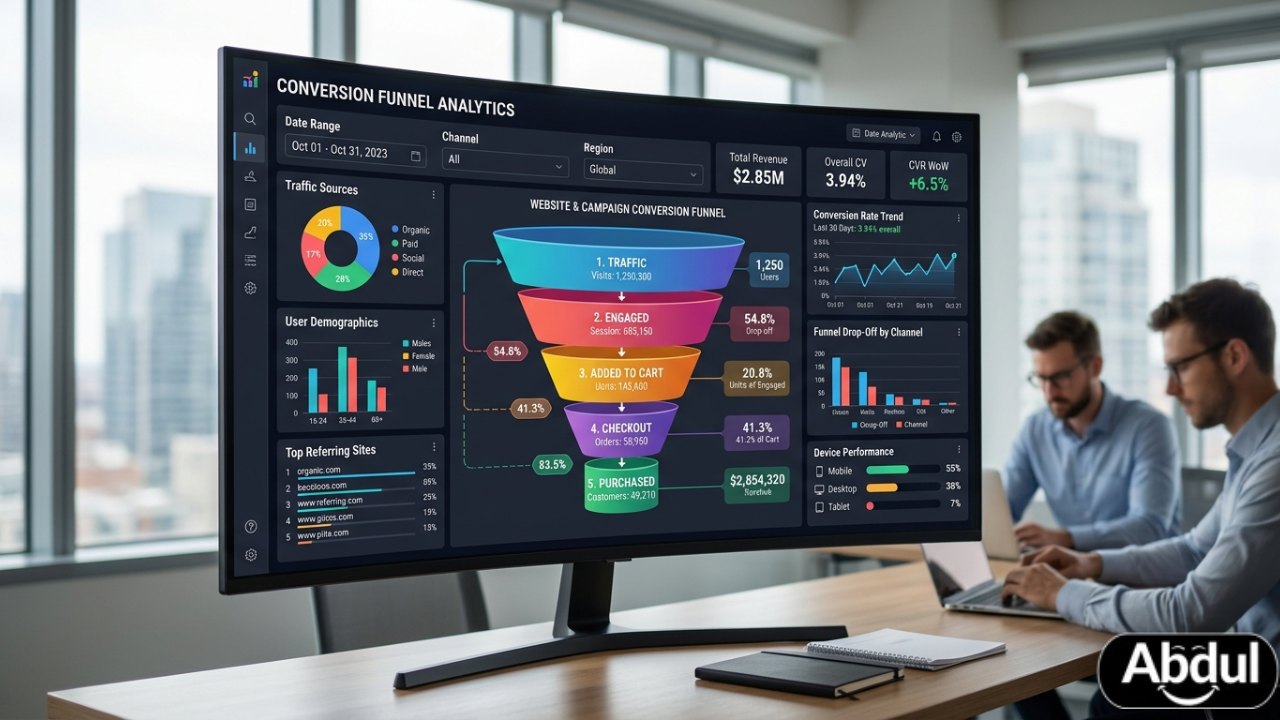 Data analytics dashboard showing conversion funnel
Why This Matters Now: CRO is the New SEO in 2026
The shift is undeniable. Google's algorithm increasingly rewards user experience. A fast, accessible, and intuitive site doesn't just rank better; it converts better. The days of keyword stuffing and link farming as primary drivers are over. Now, it's about user intent, engagement, and ultimately, conversion. Research on 'Optimize UI/UX for conversions' shows growing importance in the UI/UX Engineering: Why CRO is the New SEO in 2026 space. This isn't just academic; it's the market speaking.
Consider a local roofing contractor running Facebook Lead Ads. They might get thousands of clicks, but if their landing page takes 5 seconds to load, has tiny unreadable text on mobile, and a form that breaks on submission, those clicks are worthless. They're paying for traffic that immediately bounces. But if that same contractor invests in optimizing their UI/UX for conversions—a lightning-fast page, clear calls to action, an easy-to-use form—their cost per lead plummets, and their business explodes. This isn't magic; it's engineering.
The value of a well-engineered UI/UX isn't just about making sales; it's about building brand loyalty, reducing customer support queries, and fostering a positive brand image. In a crowded digital marketplace, the experience you provide is your ultimate differentiator. And because AI is making it easier than ever to analyze, test, and deploy optimizations, those who embrace it will dominate. Those who don't will simply be left behind.
Stop guessing. Start engineering. Your next step is clear: audit your site's stickiness and mobile performance against these 2026 standards. We specialize in UI/UX Engineering and technical QA reviews, helping businesses like yours identify and fix these critical conversion blockers. Don't let your traffic go to waste.
Unlock Your Digital Potential
Complimentary tools designed to accelerate your growth.