
The Death of the 40-Page PDF: Why Transparency is the Only Currency Left in 2026
Stop reading those glossy, over-designed marketing reports. They are where transparency goes to die. For a decade, agencies have hidden behind "proprietary data" and jargon-heavy slide decks to mask the fact that they aren't actually doing much. It’s a shell game. You pay five figures a month, and in return, you get a PDF that looks like it was generated by a tired intern using a Canva template. But the world changed. In March 2026, business owners are finally waking up to the fact that if you can’t show the work in real-time, the work probably isn't happening. This is why understanding what is a marketing Loom audit is the first step toward firing your lazy agency and actually growing your bottom line.
The "Black Box" problem has plagued the marketing industry since the first Google ad was served. Agencies love the box. They put your budget in, shake it around, and tell you that "brand awareness" is up while your bank account stays flat. It’s a scam. Transparency isn't just a buzzword anymore; it’s the only way to survive a post-cookie, AI-saturated market where every competitor is using the same automated tools. You need to see the gears turning. You need to see the actual dashboard, the broken code, and the missed opportunities in the same view as the person telling you they can fix them.
Deploy the AbdulTSD Protocol
We don't just write about Technology; we build the infrastructure that dominates it. Choose a unit to start.
Automate Your Growth with Industry-Standard Tools
Stop using limited trials. Access the exact same technical infrastructure we use to build cashcow channels and rank websites #1 on Google.
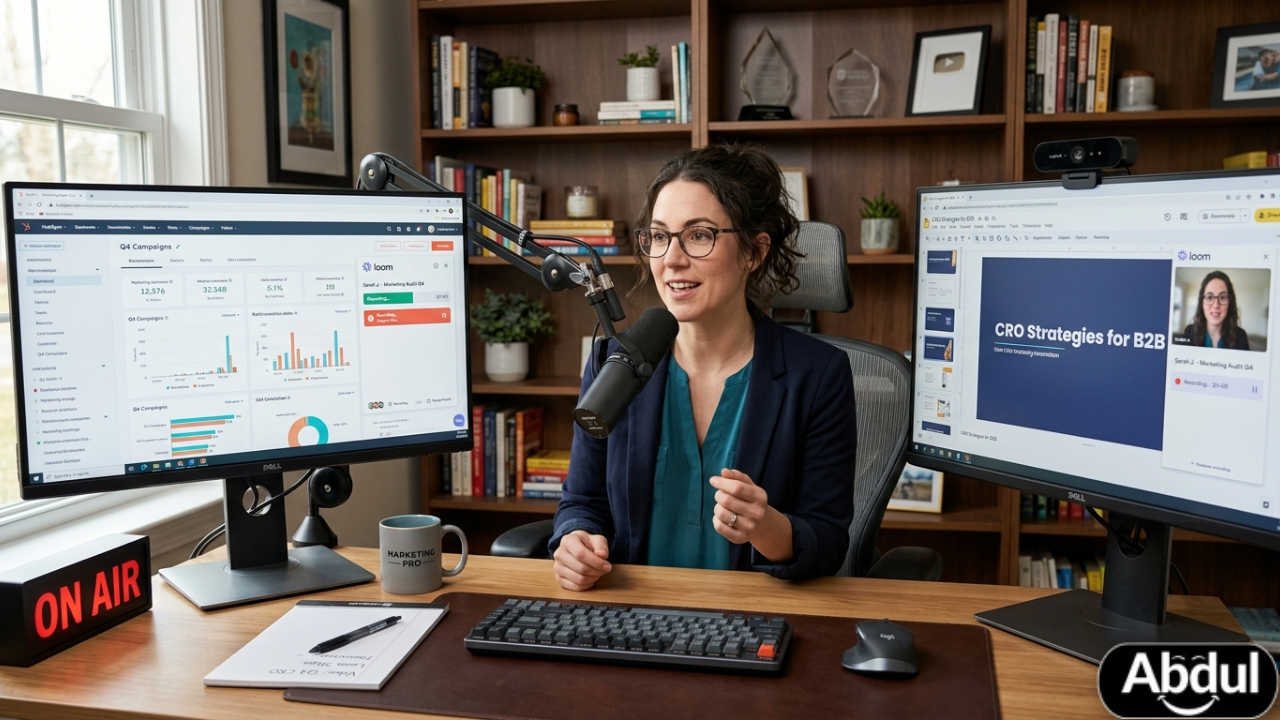 Marketing expert recording a Loom video on a dual-monitor setup
So, what is a marketing Loom audit exactly?
Forget the 40-page PDF. Please. Seriously. Those glossy, over-designed marketing reports? That’s where transparency goes to die. For a solid decade,
In 2026, this format has become the gold standard because it’s impossible to fake. When a consultant opens your WordPress dashboard or your Ahrefs profile and starts clicking through live data, you see the truth. You see the 404 errors that are killing your crawl budget. You see the "fat finger" UI flaws on your mobile checkout that are causing a 70% bounce rate. Because the video is recorded in one take, there’s no room for the creative accounting that usually happens in monthly reporting meetings. It’s honest, it’s fast, and it’s brutally effective.
Think about an e-commerce brand moving a 50k SKU catalog from Shopify to Magento. A traditional audit would take three weeks and cost $5,000 just to identify the redirect risks. A Loom audit does it in 15 minutes. The specialist shows you the CSV file, highlights the duplicate H1 tags, and explains why your current site structure is confusing Google’s bots. It’s immediate. It’s actionable. And it’s the only way to handle the complexity of modern tech stacks without losing your mind.
The Mechanics: How what is a marketing Loom audit works
The process is deceptively simple, but the execution is where most people fail. A high-level audit usually follows a specific flow: Technical Debt → SEO Visibility → Conversion Friction. The auditor starts by opening tools you probably have access to but never check, like Google Search Console or PageSpeed Insights. But instead of just sending you the link, they interpret the data in real-time. They show you the "Core Web Vitals" and explain that your LCP (Largest Contentful Paint) is slow because you’re hosting 4MB uncompressed PNGs on your homepage. That’s a $10 fix that most agencies would bill as a "Site Optimization Package."
Next, they move to the "human" side of the audit. This is where the magic happens. They’ll pull up your site on a mobile emulator and try to buy something. You’ll watch them struggle to click a "Submit" button that’s buried under a GDPR cookie banner. You’ll see them get frustrated by a pop-up that won't close. This "over-the-shoulder" perspective is invaluable. It bridges the gap between cold data and actual human behavior. Research on what is a marketing Loom audit shows growing importance in the transparent marketing space because it forces the auditor to be a practitioner, not just a reporter.
But it doesn't stop at the website. A comprehensive audit dives into your ad accounts. Imagine a specialist opening your Meta Ads Manager and showing you that you’re spending $200 a day on an audience that hasn't converted in six months. They click into the "Breakdown" tab and show you that 90% of your budget is being eaten by "Audience Network" placements that are basically just bot traffic. You can't hide that in a video. You see the wasted spend in red and white. That’s the power of the format.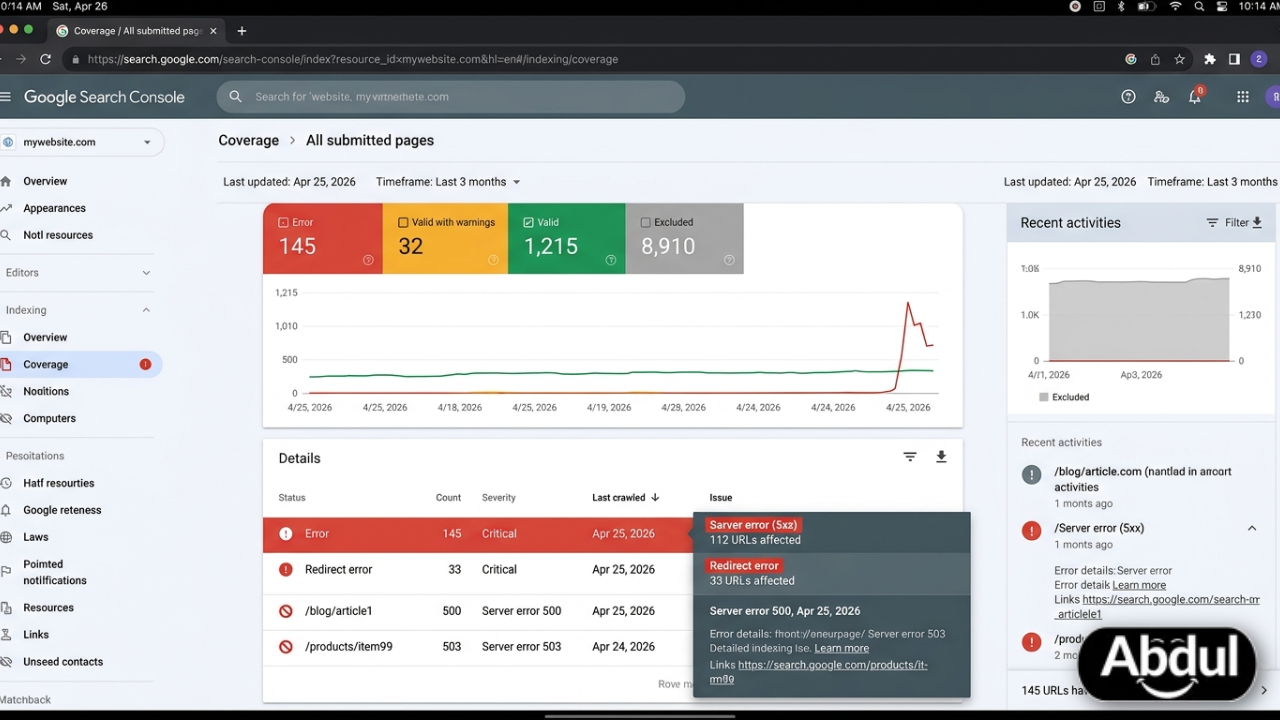 Screengrab of Google Search Console with red error highlights
The "Why": This is why what is a marketing Loom audit is important
Trust is dead in the marketing world. We killed it with "growth hacking" and "automated outreach." In 2026, the only way to rebuild that trust is through radical transparency. This is why what is a marketing Loom audit is important: it removes the "Trust Me" factor and replaces it with "See For Yourself." When you see a specialist find a broken link in your footer in real-time, you know they’ve actually looked at your site. You know they aren't just running a generic script and slapping your logo on the output.
And let’s talk about speed. In the time it takes to schedule a "discovery call" and wait for a follow-up deck, a Loom audit could have already identified the three biggest leaks in your funnel. If you're running Facebook Lead Ads for a local roofing contractor, you don't need a month-long strategy session. You need to know why your lead form is dropping 80% of users on the second question. A 5-minute video can show you that the "Zip Code" field is glitching on Android devices. Problem solved. Thousands of dollars saved. No "strategy" required.
"The era of the 'Trust Me' agency is over. If you can't record your screen and show me the problem in five minutes, you don't understand the problem well enough to fix it."
But there’s a deeper layer here. We are entering the "Greenwashing" crackdown era. Companies are being held accountable for their ESG claims and their AI ethics. If your marketing agency says they are using "Ethical AI" to optimize your bids, make them show you. A Loom audit can peek into the black box of algorithmic bidding. It can show you the settings, the exclusions, and the actual logic being used. If they refuse to show the screen, they’re hiding something. Period.
The Hard Truth About Marketing Audits
Most "free audits" are just sales pitches with a different name. They use "scareware" tactics—highlighting thousands of "errors" that don't actually matter—to pressure you into a high-ticket retainer. They’ll tell you that you have 400 pages with "missing meta descriptions," but they won't tell you that those pages are archived blog posts from 2014 that get zero traffic. They’re technically right, but practically useless. They want to overwhelm you with volume so you feel like you need their help to survive.
The reality of what is a marketing Loom audit is often much simpler and much more painful. A real audit might only find three things. But those three things are the reason you aren't hitting your revenue targets. It might be that your "Add to Cart" button is the same color as your background on certain browsers. Or that your Google My Business profile is linked to a dead landing page. These aren't "complex" problems, but they are "expensive" problems. Most agencies ignore them because they can't charge $5,000 a month to fix a button color. They’d rather sell you a "Comprehensive Content Strategy" that you don't need.
Stop falling for the "AI-Powered Audit" trap. AI is great for processing data, but it’s terrible at understanding context. An AI will tell you your copy is too long. A human doing a Loom audit will tell you that your copy is long because you’re selling a $50,000 enterprise SaaS solution that requires a high level of detail to build trust. Context is everything. If your auditor isn't talking about your specific business goals, they’re just reading a script. And you can get a script for free from ChatGPT.
The DIY Audit: 3 Things You Can Check Right Now
You don't always need a professional to spot the obvious. Before you request a formal video review, take 10 minutes to do a "mini-audit" yourself. This isn't about being a tech genius; it’s about being a skeptical customer. Open your site and look for these three things:
1. The Mobile "Fat Finger" Test
Open your website on your phone. Try to click every link in your navigation menu. Are they too close together? Do you keep hitting "About Us" when you meant to hit "Services"? If you’re struggling, your customers are too. Look at your buttons. Are they large enough to be pressed with a thumb? If not, you’re losing mobile conversions every single day. Check this inside your Free SEO Audit Tool to see how Google views your mobile usability.
2. The Broken Link Scavenger Hunt
Go to your footer. Click every single social media icon. Do they actually go to your profiles, or do they just refresh the page? You’d be surprised how many "pro" sites still have "facebook.com/your-page-here" in their footer. It looks amateur and kills trust instantly. Use a tool like Ahrefs or a simple Chrome extension to find 404 errors. Every broken link is a "Closed" sign on your storefront.
3. The Metadata Reality Check
Google your own company name. Look at the blue link and the description below it. Does it actually describe what you do *today*, or is it a snippet from three years ago? If your meta title is just "Home - [Company Name]," you’re wasting the most valuable real-time estate on the internet. Your metadata should be a mini-ad for your business. If it’s boring or broken, no one is clicking. Hand holding a smartphone showing a broken website layout
Stop Guessing and Start Growing
The "wait and see" approach to marketing is a recipe for bankruptcy in 2026. The market moves too fast, and the competition is too aggressive to rely on monthly reports that arrive three weeks late. You need clarity. You need to see the flaws in your funnel as they exist right now, not as they were described in a sanitized PowerPoint presentation. The power of the video audit lies in its ability to strip away the ego and the excuses, leaving only the data and the solution.
If you're tired of the "Black Box" and you want to see exactly why your site isn't converting, it's time for a change. Don't settle for another PDF. Demand to see the work. Look at our case studies to see how this level of transparency has transformed businesses that were previously stuck in the "agency cycle."
Stop guessing why your site isn't converting. Request a Professional Loom Audit from AbdulTSD.com and get a clear roadmap for growth. We’ll open the hood, show you the smoke, and tell you exactly how to put out the fire. No fluff. No jargon. Just the truth, recorded in 4K.
Unlock Your Digital Potential
Complimentary tools designed to accelerate your growth.