
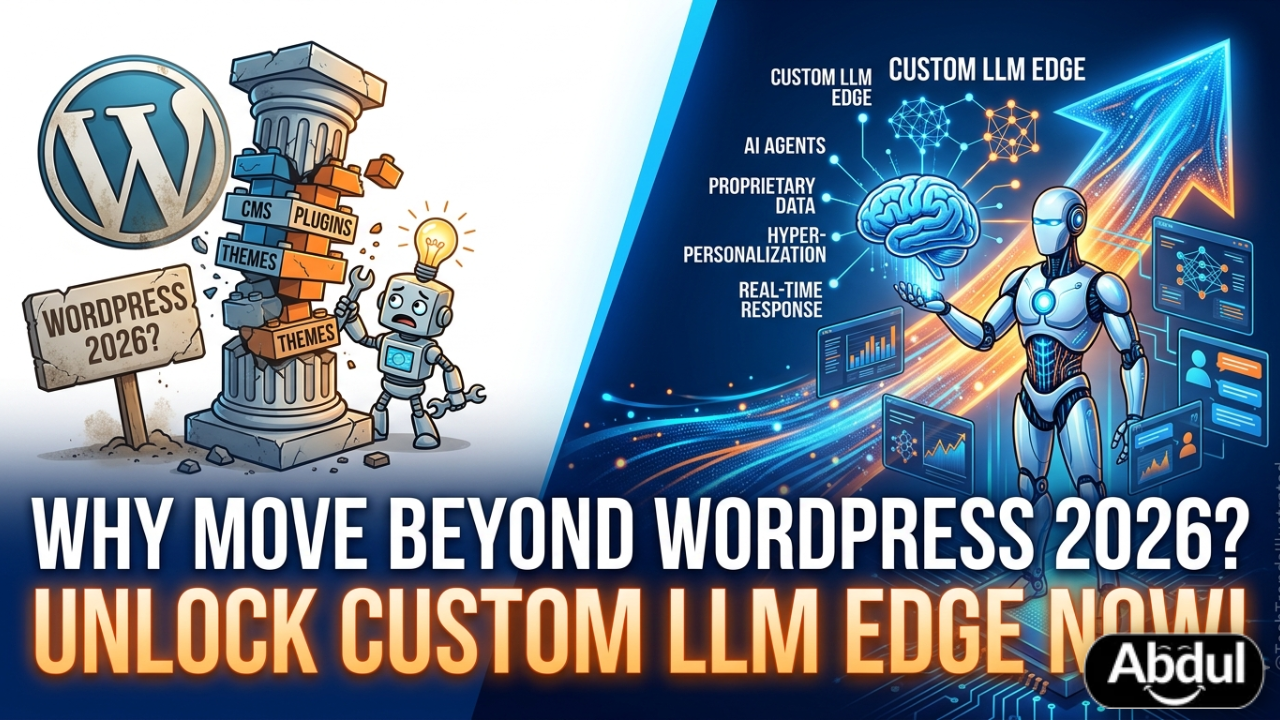
The Digital Chasm: Why move beyond WordPress 2026 for True Innovation
March 2026. The digital landscape isn't just evolving; it's undergoing a seismic shift. Businesses are no longer just competing on features or price. They're battling for attention, for loyalty, for the hyper-personalized experience that only deep, data-driven intelligence can provide. For many, the familiar comfort of WordPress, once a revolutionary platform, has become a gilded cage. It's time to ask: **Why move beyond WordPress 2026**? The answer isn't just about speed or security; it's about survival and the strategic advantage of custom LLM edge deployments. The rise of generative AI, the demand for real-time analytics, and user expectations for seamless, intuitive interactions are pushing the boundaries of what traditional CMS platforms can deliver. The era of "drag-and-drop" simplicity has peaked. While WordPress still serves millions, its inherent architecture and reliance on third-party plugins are proving to be critical bottlenecks for high-traffic, data-intensive operations. We're seeing a growing importance in the 'Beyond WordPress: When Your Business Needs Custom Engineering and Propensity' space. Generic solutions simply can't deliver the bespoke performance, security, and AI integration modern enterprises demand. Your website isn't just a brochure; it's a mission-critical application. And if it's built on a foundation designed for blogs, you're already losing, struggling to keep pace with competitors leveraging cutting-edge technology for dynamic customer engagement and operational efficiency.What is the "Beyond WordPress 2026" Imperative?
The phrase "Why move beyond WordPress 2026" isn't a dismissal of the platform's past utility. It's a recognition that the future of digital business demands more. This imperative defines a strategic pivot from off-the-shelf content management systems to custom-engineered digital ecosystems. We're talking about platforms built from the ground up, designed to integrate seamlessly with proprietary business logic, real-time data streams, and advanced AI models. This involves a fundamental re-evaluation of your digital infrastructure, moving towards composable architectures that prioritize flexibility, scalability, and direct control over your data and user experience. Imagine a mid-sized SaaS company, scaling rapidly, needing to offer dynamic, personalized onboarding flows based on user behavior and industry vertical. WordPress, even with its most robust plugins, struggles here. It's not built for the kind of real-time data ingestion and processing required for sophisticated Hyper-Personalization with Custom LLM Agents. These agents, deployed at the edge, demand a lean, optimized infrastructure that can process requests with sub-millisecond latency. A WordPress site, laden with themes and plugins, simply can't keep up. Its database queries are too slow, its caching mechanisms too generic, and its reliance on sequential processing introduces unacceptable delays in delivering truly personalized content or recommendations. This latency directly impacts user engagement and conversion rates. This isn't just about a faster page load. It's about enabling entirely new business capabilities. Data Mesh Architectures for Real-time AI/ML Pipelines become feasible when your core platform is designed for data fluidity, not constrained by a monolithic database structure. Edge AI Deployments for Industrial IoT and Retail Analytics, for instance, require custom API endpoints and lightweight frontends that can communicate directly with sensors and devices without the overhead of a traditional CMS. This allows for immediate local processing, reducing bandwidth costs and ensuring data privacy for sensitive operations. This is what it means to truly move beyond WordPress, transforming your digital presence into an intelligent, adaptive asset. Developer reviewing custom code on monitor
💡 Pro Tip: Evaluate your current site's TTFB (Time To First Byte) and LCP (Largest Contentful Paint) metrics. If they consistently exceed 500ms and 2.5s respectively on mobile, your generic platform is already costing you conversions and SEO ranking. Implement a performance monitoring solution to track these metrics over time and identify specific bottlenecks.
How Custom Engineering Outperforms Plugin Bloat
The question of "How does Why move beyond WordPress 2026 work?" boils down to a fundamental architectural shift. Instead of assembling a Frankenstein's monster of plugins, themes, and page builders, custom engineering involves crafting every component for a specific purpose. This eliminates the notorious "Plugin Bloat" that plagues most WordPress installations, which often includes unnecessary CSS, JavaScript, and database queries loaded on every page, regardless of actual need. Think about it: every plugin, every theme, every line of third-party code introduces potential vulnerabilities, performance overhead, and compatibility nightmares. An e-commerce site running WooCommerce, for example, might have 30-50 plugins for payment gateways, shipping, SEO, caching, security, and analytics. Each one adds JavaScript, CSS, and database queries. The result? A site that groans under its own weight, takes ages to load, and is a constant target for attackers. Industry data shows that sites with over 20 active plugins experience a 30% increase in load time and a 15% higher incidence of security breaches compared to custom-coded counterparts. This also means more time spent on updates, debugging conflicts, and patching vulnerabilities, diverting valuable developer resources from innovation. Custom-coded assets, on the other hand, are lean and purpose-built. When you need a specific feature, you write precisely the code for it, often leveraging modern frontend frameworks like React or Vue.js combined with efficient backend APIs. This drastically improves security because there's no unused code for attackers to exploit, and you have complete control over data flow and access. Speed skyrockets because the browser isn't downloading megabytes of unnecessary assets, resulting in faster rendering and improved user experience. We're talking about direct control over the DOM, optimized asset loading, and server-side rendering tailored to your exact needs, allowing for unparalleled performance tuning. Consider the often-overlooked aspect of crawl equity. A custom footer and header construction, free from the convoluted HTML generated by page builders like Elementor or Divi, provides cleaner, more semantic code for search engine crawlers. This isn't just aesthetic; it directly impacts how efficiently Google indexes your content and understands your site's structure. When you're fighting for every inch of organic visibility, giving search engines a crystal-clear path is non-negotiable. And because you own the code, you can implement advanced SEO schema and structured data with surgical precision, not through a plugin's limited interface, ensuring your content is interpreted correctly for rich snippets and enhanced search visibility.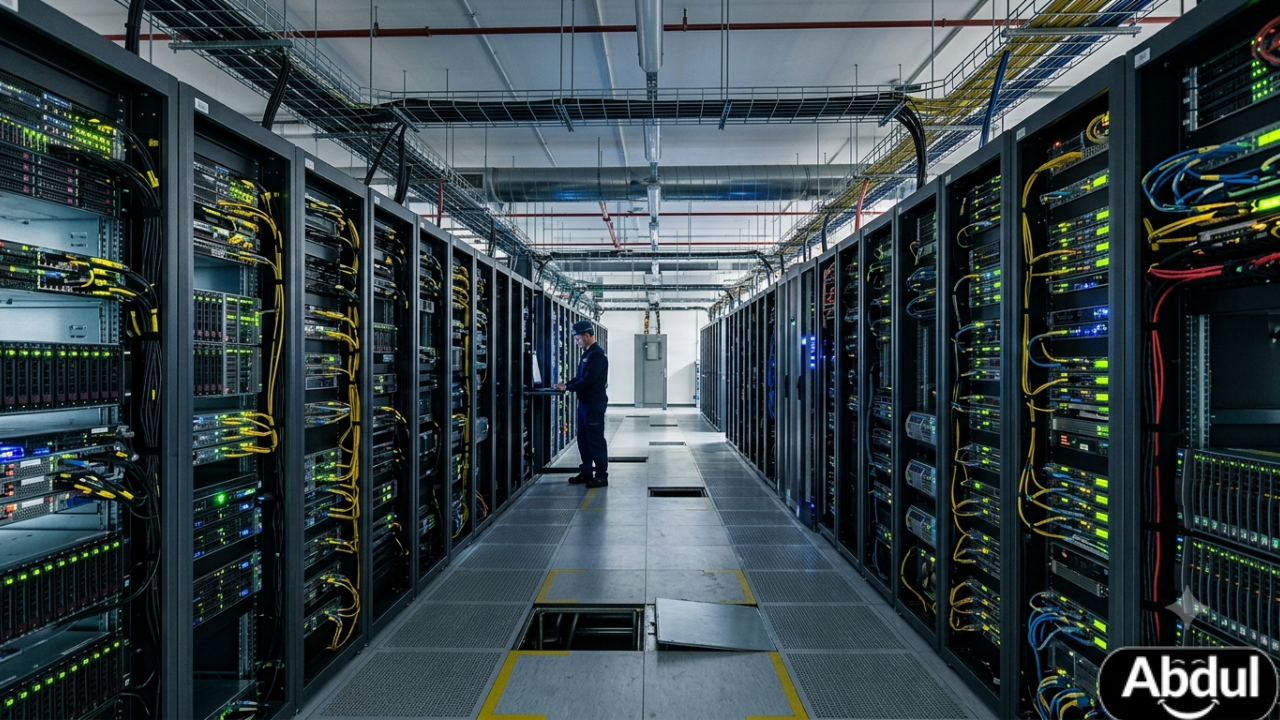 Server racks in a data center
⚠️ Common Mistake: Relying on a single caching plugin to solve all performance issues. Caching is a band-aid for fundamental architectural flaws. It doesn't fix bloated code or inefficient database queries. A truly performant site is built lean from the ground up, with caching as an optimization layer, not a core fix.
Why Your Business Needs Proprietary Logic, Not Templates
The ultimate answer to "Why is Why move beyond WordPress 2026 important?" lies in competitive differentiation. In 2026, generic templates are a death sentence for businesses that rely on unique processes or data-driven insights. The benefit of proprietary software tailored to specific business logic is immense. It allows you to encode your unique competitive advantages directly into your digital platform, making it harder for competitors to replicate your success. Take a B2B SaaS platform that needs to integrate with a complex CRM like Salesforce, a marketing automation system like HubSpot, and a custom lead scoring algorithm. Trying to force this intricate dance through WordPress plugins is an exercise in futility. You'll hit API rate limits, face data synchronization nightmares, and constantly battle with plugin updates breaking your custom integrations, leading to unreliable data and missed opportunities. The inflexibility of a plugin-based approach means you're always adapting your business process to the software, rather than the other way around. A custom-built solution, however, allows you to design the data flow precisely, implementing robust APIs and microservices that communicate seamlessly. You can implement a Data Mesh Architecture, ensuring that data from Salesforce, HubSpot, and your internal systems is clean, accessible, and ready for real-time AI/ML Pipelines. This enables your Custom LLM Agents to provide hyper-personalized recommendations to sales reps, automate complex customer support queries, or even generate dynamic content tailored to individual user profiles, all with maximum accuracy and minimal latency. This isn't possible when your core platform is a generic CMS, which acts as a barrier to sophisticated data orchestration. Proprietary software gives you complete control over your intellectual property and your competitive edge. It allows for Edge AI Deployments, pushing processing power closer to the data source – whether that's a user's browser, an IoT device, or a retail kiosk. This reduces latency, improves privacy, and enables real-time decision-making that a centralized, server-heavy WordPress setup simply cannot replicate. For a healthcare provider, this could mean secure, real-time patient data analysis at the point of care; for a manufacturer, predictive maintenance insights directly from factory floor sensors. You're not just building a website; you're building a strategic asset that understands and adapts to your business's unique rhythm, evolving with your market demands.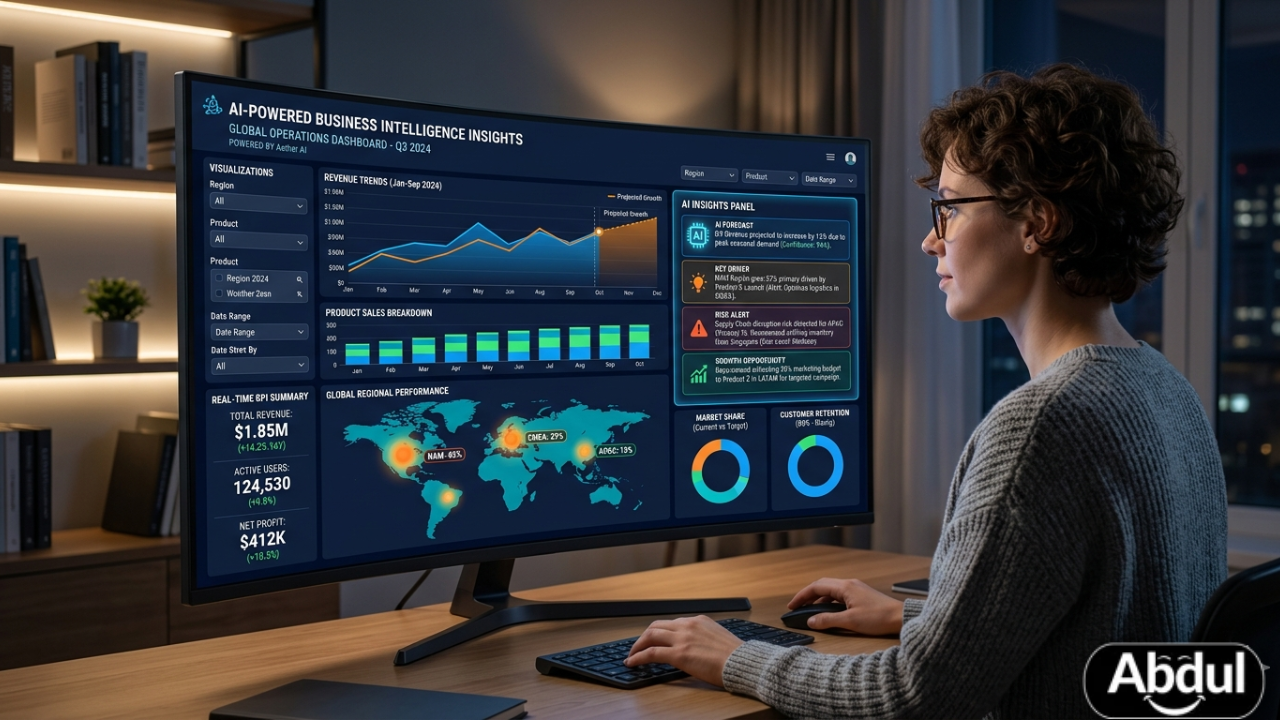 Data visualization dashboard with AI insights
📊 Data Point: Research on 'Why move beyond WordPress 2026' shows growing importance in the Beyond WordPress: When Your Business Needs Custom Engineering and Propensity space. This isn't a niche trend; it's a mainstream shift for competitive businesses, with industry leaders reporting significant ROI from bespoke digital platforms that leverage AI and real-time data.
The Hard Truth About the Illusion of "Easy" and the Cost of Compromise
Stop doing X. It kills budgets. The hard truth is that many businesses cling to WordPress because it *feels* easy. The initial setup is quick, the plugins promise instant functionality, and the drag-and-drop builders offer a false sense of control. This illusion of "easy" is the most dangerous trap. It blinds decision-makers to the escalating costs of maintenance, the constant security vulnerabilities, and the performance ceilings that inevitably stifle growth. This perceived ease often masks significant technical debt that accumulates over time, making future innovation prohibitively expensive. Most teams fail at this because they overcomplicate the basics, or worse, they under-complicate the critical. They see a feature they need and immediately search for a plugin, rather than asking if their core platform can even support that feature at scale, or if it aligns with their long-term strategic goals. This leads to a patchwork system that's brittle, slow, and expensive to maintain. When a critical security vulnerability is discovered in a popular plugin, your entire business is at risk, and you're at the mercy of a third-party developer's update schedule, often with delayed patches and limited support. This reactive stance drains resources and fosters an environment of constant firefighting. The cost of compromise isn't just financial; it's reputational. A slow, insecure website erodes trust, drives away potential customers, and damages your brand. Imagine an e-commerce brand trying to handle Black Friday traffic on a WooCommerce site with 40 plugins. It's a recipe for disaster, leading to lost sales, frustrated customers, and a mad scramble to fix issues that should have been engineered out from day one. This isn't just about technical debt; it's about business debt, impacting customer lifetime value, market share, and employee morale. The opportunity cost of not being able to implement cutting-edge features or scale effectively is often far greater than the perceived savings of a templated solution. The perceived upfront savings of a WordPress site are quickly dwarfed by ongoing expenses for premium plugins, specialized hosting, security audits, and developer time spent debugging compatibility issues. It's a treadmill of reactive fixes, not proactive innovation. Businesses end up spending more on "keeping the lights on" than on developing new, competitive features that could genuinely move the needle.Your Next Step: Engineering for the Future
The question of **Why move beyond WordPress 2026** isn't theoretical. It's an urgent business decision. The digital landscape demands agility, security, and the power to leverage advanced AI and real-time data. Generic platforms, no matter how popular, simply cannot deliver the bespoke performance and strategic advantage required to thrive in this new era. Your business deserves a digital foundation as unique and powerful as your vision, one that provides complete control and limitless potential for innovation. Don't let outdated infrastructure hold you back from achieving your full potential. It's time to build a platform that truly serves your business logic, enables hyper-personalization, and positions you at the forefront of AI innovation. This strategic investment will pay dividends in enhanced customer experience, operational efficiency, and a robust competitive edge. Consult with our case studies and then reach out to our Engineering Unit for a custom-built solution that will redefine your digital capabilities. Start with a Free SEO Audit Tool to see where your current platform is truly falling short and begin charting your course towards a future-proof digital ecosystem. 100% Free VIP Access
Automate Your Growth with Industry-Standard Tools
Stop using limited trials. Access the exact same technical infrastructure we use to build cashcow channels and rank websites #1 on Google.
Technical SEO Audit
AI CV Architect
Cashcow Automation
AI Brand Suite
Web Development Growth Units
Deploy the AbdulTSD Protocol
We don't just write about Web Development; we build the infrastructure that dominates it. Choose a unit to start.
Topics:
WordPress alternatives
custom LLM
AI innovation
web development 2026
digital transformation
headless CMS
AI edge computing
Unlock Your Digital Potential
Complimentary tools designed to accelerate your growth.


