The Death of the Blue Link: Why Your 2024 Strategy is a Liability
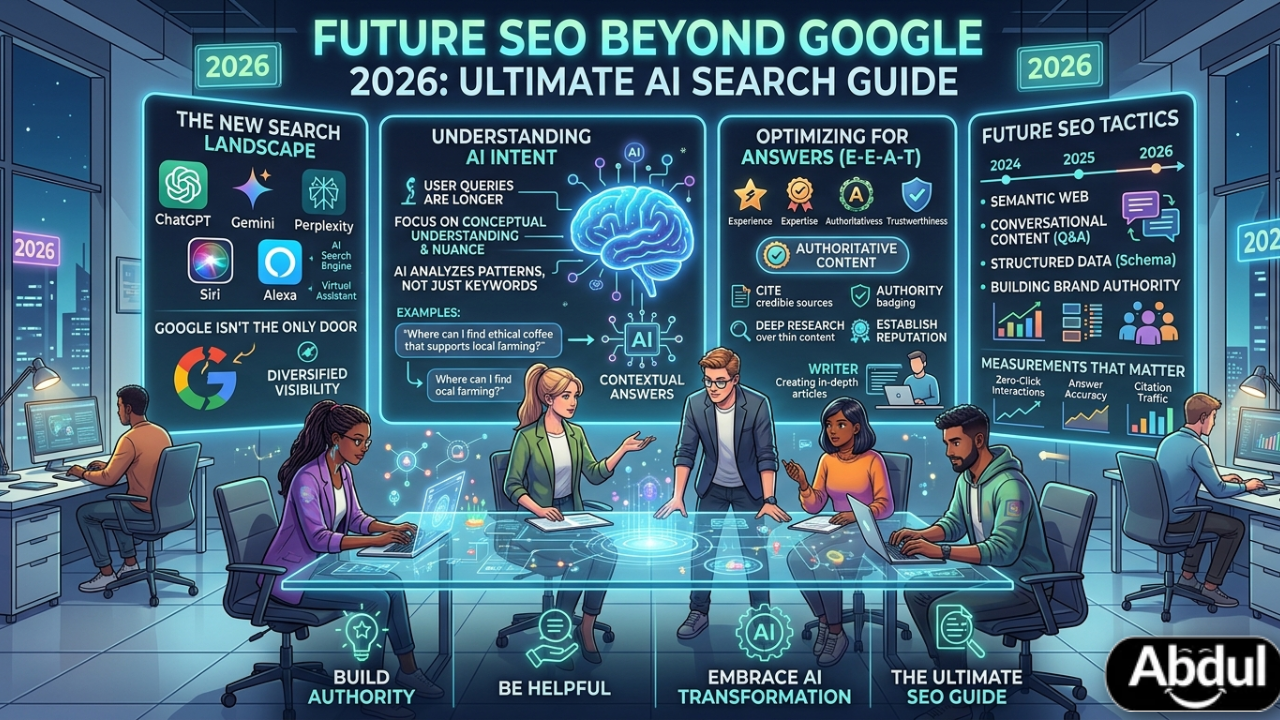
The search bar is a relic. By March 2026, the act of "Googling" has shifted from a primary instinct to a secondary backup. Users don't want a list of ten blue links that force them to click, wait for a WordPress site to load, and dodge three pop-ups just to find a recipe or a software comparison. They want answers. They are asking Gemini while driving, prompting Perplexity during research sessions, and scrolling TikTok to see if a product actually works. If your marketing team is still obsessing over "ranking #1" for a high-volume keyword in a traditional SERP, you are effectively invisible to the modern consumer. We have entered the era of "Search Everywhere," and navigating the shift toward future SEO beyond Google 2026 requires a total teardown of your current playbook.
Most brands are failing because they treat AI as a threat to be blocked rather than a distribution channel to be fed. They hide their best insights behind gated PDFs or long-winded introductions. But the bots don't have time for your fluff. Neither do the users. Winning in this environment means becoming the definitive source that an AI agent cites when a user asks, "What is the best enterprise CRM for a 50-person remote team?" If you aren't in that generated answer, you don't exist. Stop waiting for the "recovery" of organic traffic. It isn't coming back in the way you remember. You have to go where the eyeballs are moving.
Deploy the AbdulTSD Protocol
We don't just write about SEO & Marketing; we build the infrastructure that dominates it. Choose a unit to start.
Automate Your Growth with Industry-Standard Tools
Stop using limited trials. Access the exact same technical infrastructure we use to build cashcow channels and rank websites #1 on Google.
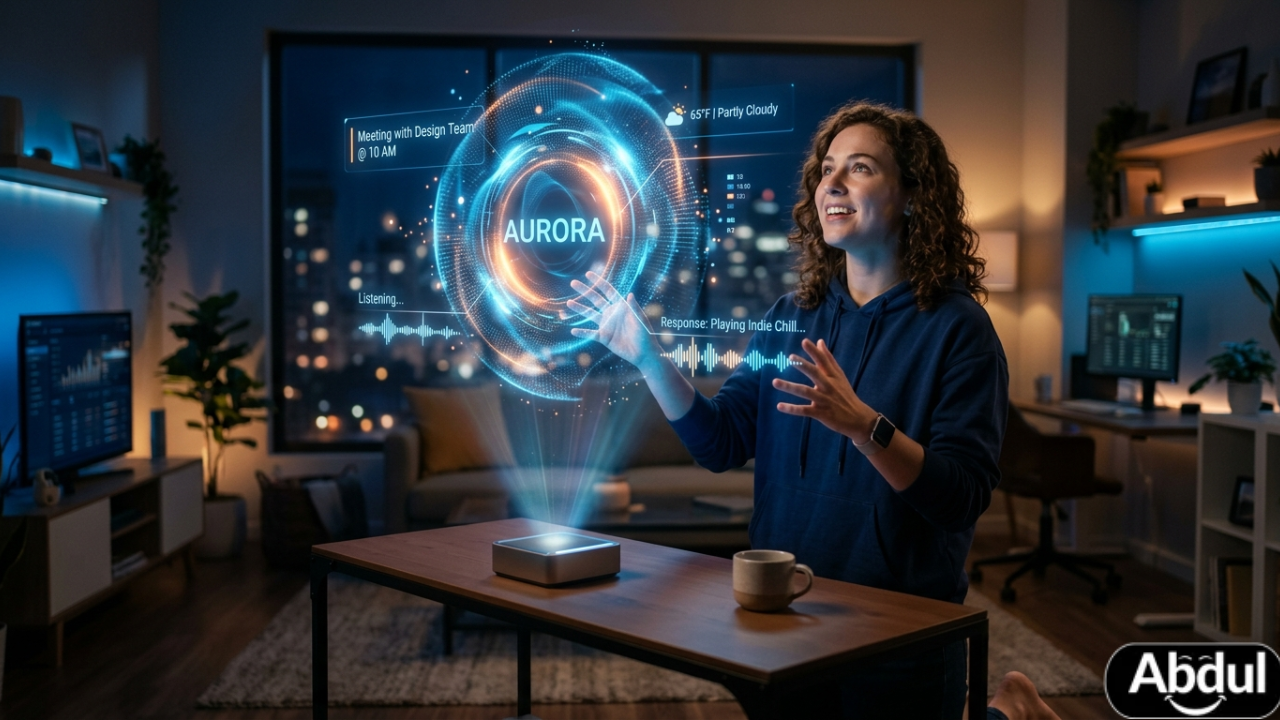 User interacting with a holographic AI voice assistant
What is future SEO beyond Google 2026?
RIP the blue link. By 2026, "Googling" feels like sending a fax—clunky, slow, and frankly, a total
And this isn't just about ChatGPT. It’s about the fragmentation of intent. When a developer needs to debug a React component, they go to GitHub or an AI-integrated IDE. When a Gen Z shopper wants a new skincare routine, they go to TikTok or Instagram. Your content must be modular. It needs to be "scrappable" by AI agents and "shippable" to social platforms. You are no longer building a destination; you are building a reputation that exists independently of a single search box. But most companies are too slow to adapt. They are still trying to fix their Core Web Vitals while their competitors are getting cited in the "Sources" section of a Perplexity answer.
How does future SEO beyond Google 2026 work?
The mechanics of future SEO beyond Google 2026 rely on three pillars: Semantic Density, Entity-Based SEO, and Answer Engine Optimization (AEO). Forget about keyword density. If you mention "cloud security" 50 times, the AI knows you're trying too hard. Instead, you need to build "Topic Clusters." If you want to be an authority on cloud security, you need to talk about zero-trust architecture, IAM roles, and SOC2 compliance in a way that shows the relationship between these concepts. You are teaching the LLM that your brand is an "Entity" synonymous with that niche.
But how do you actually get cited? You connect your brand name to specific digital services in the "Knowledge Graph." This involves using Schema.org markup more aggressively than ever before. But don't just stop at basic "Article" schema. Use "Service," "Product," and "Review" schema to tell the AI exactly what you do. When an AI agent like Rabbit R1 or a specialized GPT-5 agent looks for a solution, it parses this structured data to verify your legitimacy. Because the AI doesn't "read" like a human; it maps connections between data points. If your site is a mess of unstructured text, you're just noise.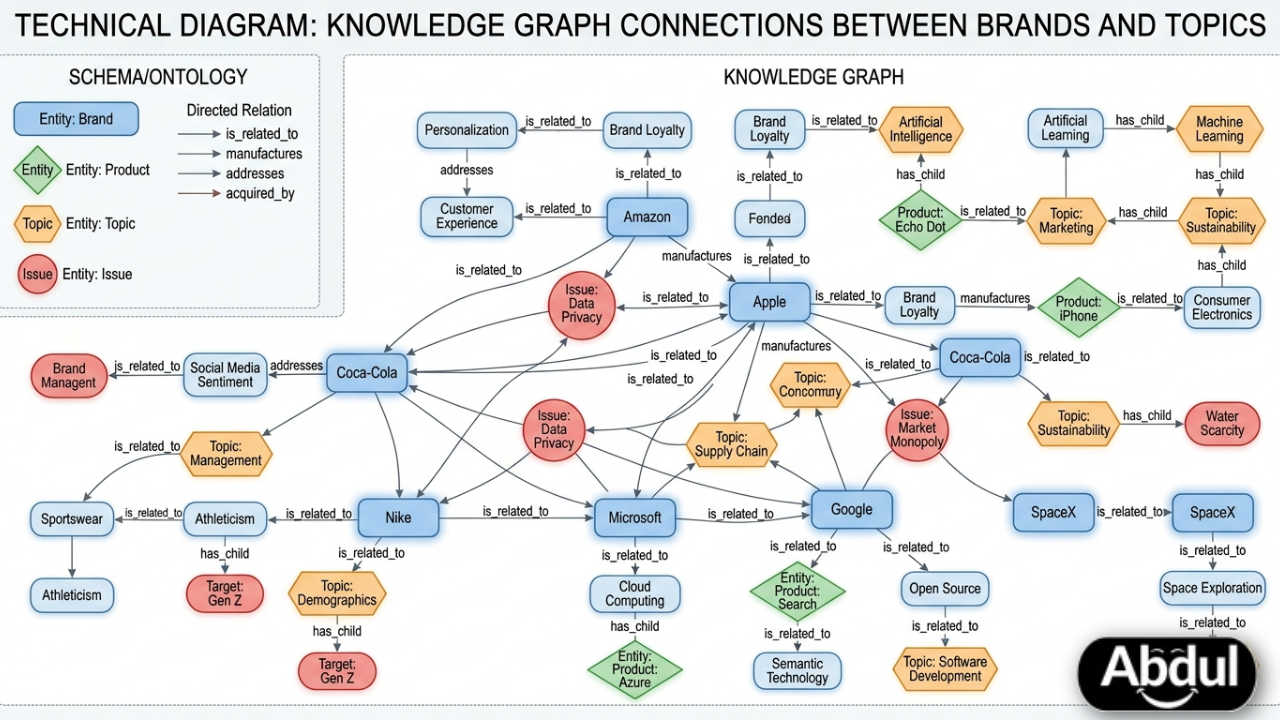 Technical diagram showing Knowledge Graph connections between brands and topics
Take a mid-sized e-commerce brand selling ergonomic office chairs on Shopify. In the old days, they’d buy backlinks from "lifestyle blogs." In 2026, they need to ensure their product specs are in a clean JSON-LD format. They need to have 4k video reviews on YouTube and TikTok because Google’s "Perspectives" and AI overviews prioritize multi-modal content. They need to be mentioned in Reddit threads where real humans are discussing back pain. The AI sees all of this. It aggregates the sentiment. And then, when someone asks their AI assistant for a chair recommendation, that brand pops up because it has the highest "Entity Authority."
Why is future SEO beyond Google 2026 important?
Because the "Search Everywhere" era has destroyed the monopoly of the browser. We are seeing a massive shift toward autonomous AI personal assistants. These agents don't browse the web; they execute tasks. If a user says, "Find me a local roofing contractor with a 4.5-star rating who can come out this Thursday," the agent isn't going to show the user a list of websites. It’s going to call the API of a booking tool or scrape local directories. If your business isn't optimized for these agents, you are locked out of the transaction entirely.
But there is another reason: Trust. The web is being flooded with low-quality, AI-generated garbage. Users are retreating to "walled gardens" and verified communities like Discord, Reddit, and LinkedIn to find information they can actually trust. This is why future SEO beyond Google 2026 is important—it forces you to build a brand, not just a website. You have to prove you are a real human or a real company with real expertise. Google’s E-E-A-T (Experience, Expertise, Authoritativeness, Trustworthiness) isn't just a guideline anymore; it's the barrier to entry. If you don't have a recognizable "Entity" in the Knowledge Graph, you're just another bot-generated site destined for the digital graveyard.
The Hard Truth About Future SEO
Most SEO agencies are selling you a corpse. They are still charging you for monthly "keyword reports" and "backlink building" that move the needle exactly zero inches in an AI-first world. The reality of future SEO beyond Google 2026 is that 70% of your traditional organic traffic is at risk. If your business model relies on "informational" clicks—people looking for "how to" guides or "what is" definitions—you are in trouble. AI models provide those answers directly in the interface. You will never get that click.
Stop lying to yourself about "brand awareness" from top-of-funnel blog posts. If the user doesn't have to leave the search interface to get the answer, your tracking pixel never fires. You don't get the cookie. You don't get the retargeting opportunity. The only way to survive is to own the "Conversion" and "Deep Research" phases. You need to provide the tools, the proprietary data, and the unique opinions that an AI cannot replicate. If your content can be summarized by a bot without losing its value, your content is worthless. Be blunt. Be controversial. Provide the raw data that the AI needs to cite. That is the only way to stay relevant.
"The future of search isn't about finding a website; it's about the website finding the user through the AI agents they trust. If you aren't part of the training set, you aren't part of the conversation."
The "Search Everywhere" Template
To win, you need a distribution workflow that looks like this. When you publish a piece of content on your WordPress or Webflow site, it shouldn't just sit there. You need to atomize it immediately. Take the core data and turn it into a LinkedIn carousel. Take the "Key Takeaway" and turn it into a 60-second TikTok. Push the structured data to your Google Business Profile. And most importantly, ensure your site's API or RSS feed is accessible to the crawlers used by Perplexity and OpenAI. If you're running a 50k SKU catalog on Magento, your product feeds need to be as clean as a Salesforce database. Any friction in the data is a reason for the AI to skip you.
But don't overcomplicate the basics. At the end of the day, the AI is trying to satisfy a human user. If your site is slow, hard to read, or full of intrusive ads, the AI will eventually learn that sending users to you results in a bad experience. Even in 2026, user signals matter. But they aren't just "clicks" anymore. They are "citations," "saves," and "shares" across the entire digital ecosystem. You are no longer an SEO; you are a Digital Presence Architect.
Next Steps: Stop Chasing, Start Owning
Mastering future SEO beyond Google 2026 requires a shift from a reactive mindset to a proactive one. Stop waiting for Google to release another "Core Update" that nukes your traffic. Start building your own "Entity" today. Audit your current content: is it structured for AI? Is your brand connected to the right topics in the Knowledge Graph? If you're still stuck in the 2024 mindset, you're already behind. AbdulTSD uses Generative Engine Optimization to put your brand in every AI-generated answer, ensuring you aren't just found, but chosen. Check out our case studies to see how we've transitioned brands into the AI-first era. Then, use our Free SEO Audit Tool to see how an AI bot actually views your site. The era of the blue link is over. It's time to own the niche.
Unlock Your Digital Potential
Complimentary tools designed to accelerate your growth.